
Most Sunshine Coast households replace home electronics far sooner than they need to. A television that develops a minor fault, an amplifier that starts humming, a set-top box that runs slow these are problems that feel like the end of the line but are often straightforward to address. With the right care habits and a little preventative maintenance, most home electronics will last significantly longer than the average Australian household gets out of them.
At Brocky’s Electronics, we repair and service home electronics across the Sunshine Coast every week. We see the same avoidable faults repeatedly, and we know exactly what separates equipment that lasts a decade from equipment that fails in three years. Here’s what actually makes the difference.
Why Home Electronics Fail Before Their Time
Before getting into the fixes, it’s worth understanding why home electronics degrade faster than they should. The most common causes we see on the Sunshine Coast are:
- Heat buildup from poor ventilation or dusty environments
- Power surges and electrical spikes from the mains supply
- Coastal humidity and salt air accelerating internal corrosion
- Lack of basic maintenance allowing minor faults to become major ones
- Incorrect use or storage shortening component lifespan prematurely
Most of these are entirely preventable. Here’s how to address each one.
Practical Ways to Extend the Lifespan of Your Home Electronics
1. Keep Ventilation Clear at All Times
Heat is the single biggest enemy of home electronics. Every television, amplifier, set-top box, and gaming console relies on airflow to keep internal components within safe operating temperatures. When vents are blocked, heat builds up, components degrade faster, and protective shutdowns become more frequent until the device fails entirely.
What to do:
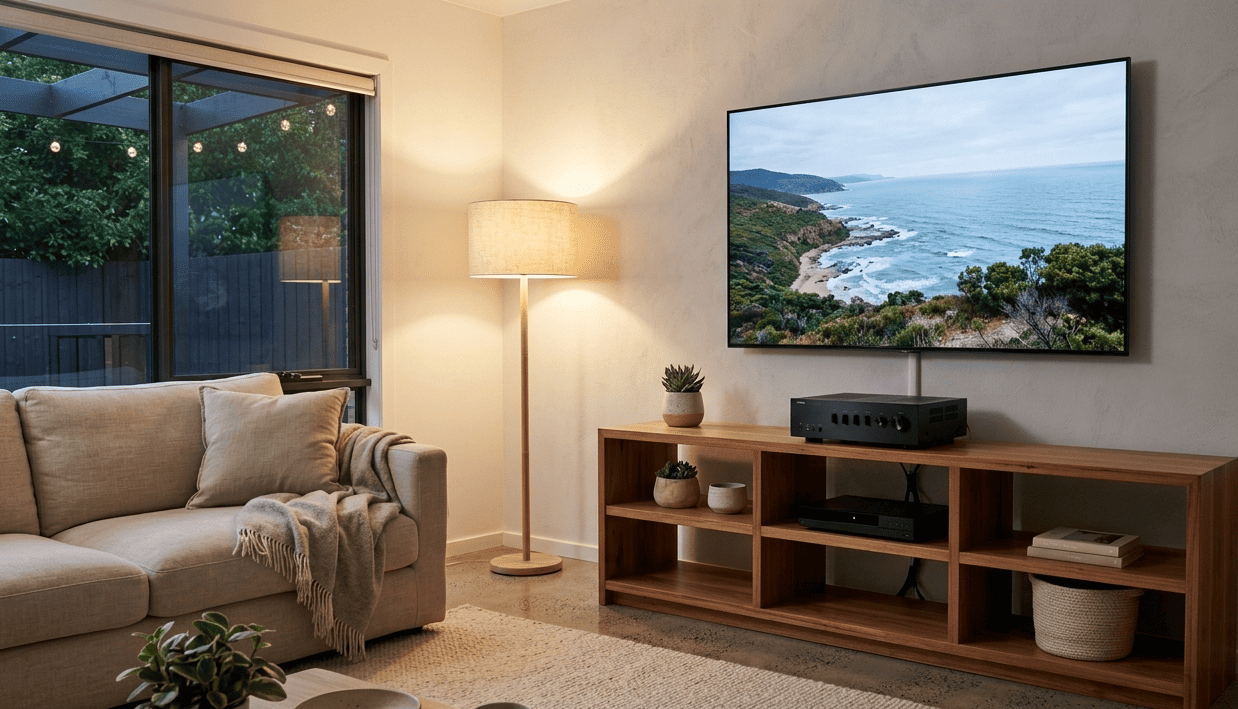
- Maintain at least 10 to 15 centimetres of clearance around all sides of heat-generating equipment
- Never stack devices directly on top of each other
- Use open-frame entertainment units rather than enclosed cabinets
- Keep equipment away from direct sunlight and heat sources like radiators or north-facing windows
2. Use Surge Protection on Every Device
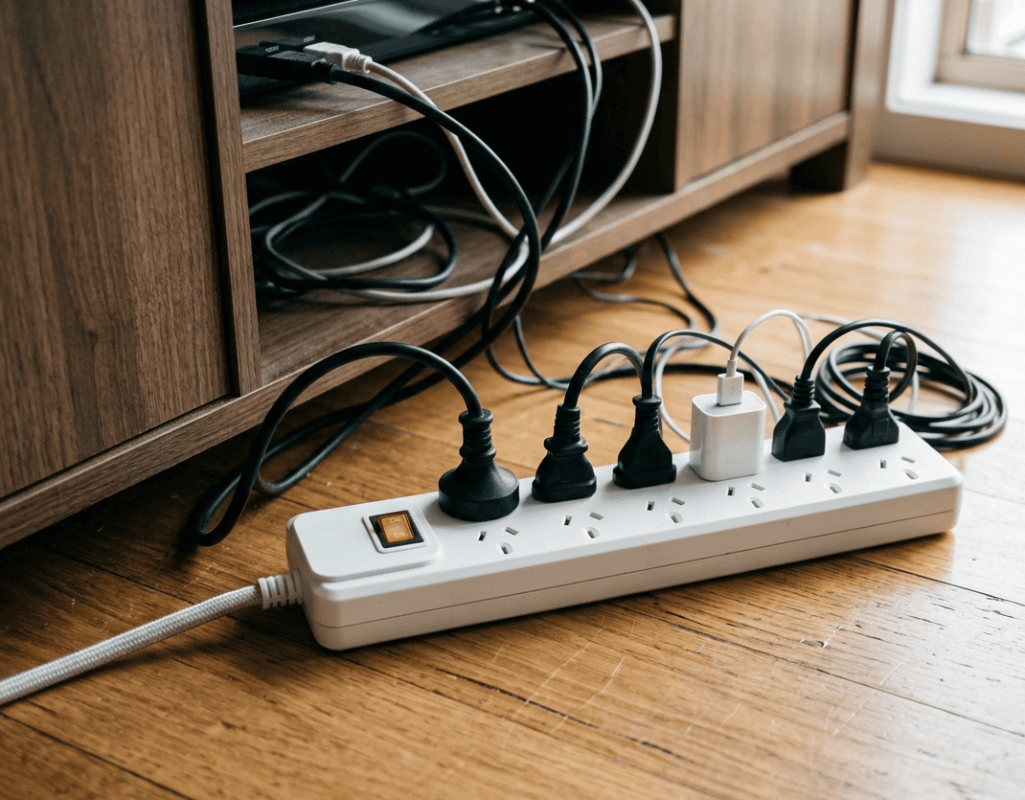
Power surges are one of the most overlooked causes of premature failure in home electronics on the Sunshine Coast. A single surge event, from a storm, a grid fluctuation, or a nearby lightning strike, can silently damage internal components in ways that don’t show up immediately but shorten the device’s life significantly.
What to do:
- Plug all home electronics into quality surge-protected power boards rather than standard power boards
- Replace surge protectors every three to five years, as their protection degrades over time
- Unplug high-value equipment during electrical storms where practical
- Consider a whole-home surge protection device if your property experiences regular power fluctuations
3. Clean Dust from Vents and Fans Regularly
Dust accumulation inside home electronics acts as an insulating layer over heat-sensitive components, trapping heat and causing fans to work harder than they should. It’s one of the most common causes of premature failure we see, and it’s entirely preventable.
What to do:
- Use compressed air to clean external vents and fan intakes every six to twelve months
- Keep equipment off carpeted floors where dust is drawn upward through vents
- In homes with pets, increase cleaning frequency to every three to four months
- Have older or heavily used equipment professionally cleaned internally every few years
4. Manage the Sunshine Coast’s Coastal Environment
Sunshine Coast homes, particularly those within a few kilometres of the ocean, face an additional challenge that most electronics care guides don’t account for. Salt air accelerates corrosion on internal circuit board contacts, connectors, and metal components, shortening the lifespan of home electronics faster than inland environments.
What to do:
- Keep electronics in climate-controlled rooms where possible, particularly during humid summer months
- Avoid leaving equipment powered off for extended periods in unventilated rooms where humidity accumulates
- Inspect connectors and cable ends periodically for early signs of corrosion, green or white residue on metal contacts
- Address any signs of corrosion early rather than waiting for a fault to develop
As covered in how environmental factors affect electronic component lifespan, temperature, humidity, and airborne contaminants are among the leading environmental causes of premature electronic failure, factors that are particularly relevant along the Queensland coast.
5. Don’t Ignore Minor Faults
One of the most reliable ways to shorten the lifespan of home electronics is to ignore a minor fault and hope it resolves itself. A television with occasional flickering, an amplifier with intermittent hum, or a set-top box that restarts unpredictably are all showing early signs of component degradation. Left unaddressed, these faults compound and typically result in far more expensive repairs later, or complete failure.
What to do:
- Address unusual behaviour promptly rather than waiting for a complete failure
- Have a qualified technician assess intermittent faults before they become permanent ones
- Keep a mental note of when a fault first appeared and how it’s progressing, this information helps technicians diagnose faster
If your television has been showing signs of trouble, troubleshooting common TV issues at home covers the basic checks worth trying before booking a professional assessment.
6. Store and Transport Equipment Correctly
How home electronics are stored and moved has a significant impact on their long-term condition. Physical shock, vibration, and inappropriate storage conditions are responsible for a number of faults we see that could easily have been prevented.
What to do:
- Use original packaging or purpose-designed carry cases when transporting equipment
- Never store electronics in garages, sheds, or outdoor areas where temperature and humidity fluctuate significantly
- Avoid placing heavy items on top of equipment during storage or transport
- Allow equipment that has been stored in a cold environment to reach room temperature before powering on, condensation inside a cold device can cause short circuits
7. Schedule Professional Servicing for High-Value Equipment
Just like a car, home electronics benefit from periodic professional servicing rather than waiting for something to go wrong. A qualified technician can identify degrading components before they cause a fault, clean internal components that can’t be reached from the outside, and extend the service life of equipment significantly.
For televisions in particular, TV repair and servicing on the Sunshine Coast covers everything from panel faults and backlight issues to full internal assessments for Sunshine Coast households wanting to get the most out of their existing equipment.
When to Repair Rather Than Replace
The decision to repair or replace home electronics is one we help Sunshine Coast households make regularly. In most cases, repair is significantly more cost-effective than replacement, particularly for quality brands and equipment that is less than ten years old.
A professional assessment is always worth having before writing off a device. At Brocky’s Electronics, we give honest advice about whether repair makes sense before any work begins, so you’re never spending money on a device that isn’t worth it.
Here are clear signs repair is the right call:
- The fault is isolated to a single component rather than widespread board damage
- The device is a quality brand with a replacement cost significantly above repair cost
- The device is less than eight to ten years old and hasn’t had previous major repairs
- Replacement parts are available and reasonably priced
Why Sunshine Coast Locals Trust Brocky’s Electronics
We’re a local workshop, not a mail-away repair centre. When you bring your home electronics to us, a qualified technician with real hands-on experience assesses the device honestly and gives you clear options before any work begins.
Here’s what you get with every service at Brocky’s Electronics:
- Experienced technicians across all major brands and device types
- Honest advice, we’ll always tell you if replacement makes more sense
- Fast turnaround, because we know you need your equipment working
- Genuine replacement parts wherever possible
- Transparent, upfront pricing with no surprises
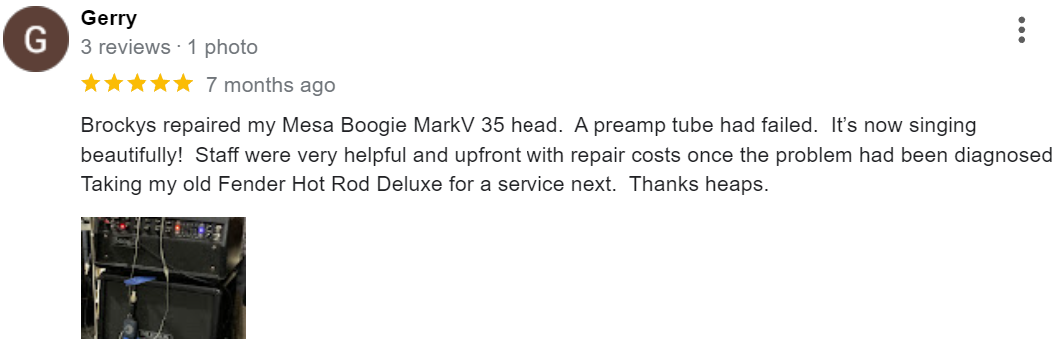
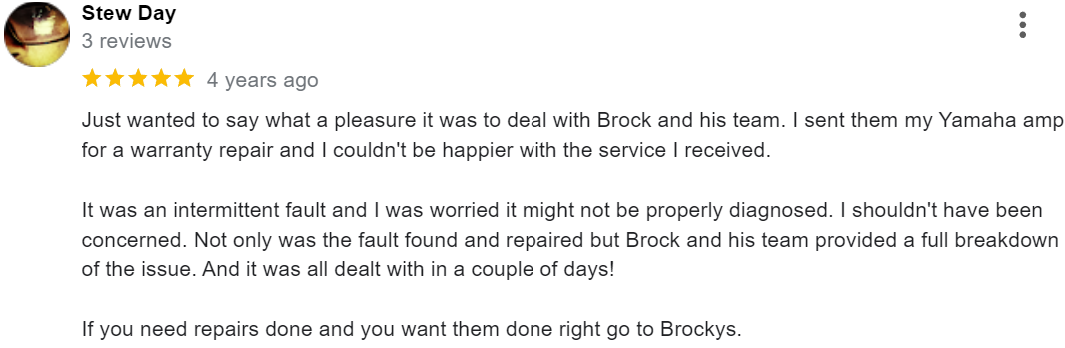
We’ll let the locals we’ve helped do the talking.
Get More Years From Your Home Electronics
Don’t replace what can be repaired, and don’t wait until a minor fault becomes a major one. Whether it’s a professional service, a targeted repair, or honest advice on whether repair is worth it, the team at Brocky’s Electronics is ready to help.
From extending the lifespan of home electronics to full repairs across televisions, amplifiers, digital pianos, and audio equipment, you can find everything we do at Brocky’s Electronics.
Contact Brocky’s Electronics today and we’ll help you get more years out of the equipment you already own.
FAQs
1. How long should home electronics last on the Sunshine Coast?
With proper care, most quality home electronics last 8 to 15 years. Poor ventilation, dust buildup, and power surges are the most common reasons devices fail well before that.
2. Does coastal air really affect home electronics?
Yes. Salt air accelerates internal corrosion on circuit board contacts and connectors, particularly in homes within a few kilometres of the ocean. Climate-controlled storage and periodic professional cleaning help significantly.
3. Is it worth repairing older home electronics or replacing them?
In most cases, repair is more cost-effective for quality brands under ten years old. A professional assessment will tell you honestly whether repair or replacement makes more financial sense.
4. How often should I clean the vents on my home electronics?
Every 6 to 12 months for most households, more frequently in homes with pets or carpet. Compressed air on external vents takes minutes and makes a real difference to operating temperatures.
5. Do surge protectors really make a difference?
Yes. A quality surge protector can prevent significant damage from power spikes. Replace them every 3 to 5 years, as their protective capacity degrades over time.