
You sit down to practise, warm up, and something feels wrong immediately. One key produces no sound. Another sticks halfway down. A third triggers notes randomly without being touched. If this sounds familiar, you’re not alone, and the good news is that most digital piano key faults are very fixable with the right digital piano repair approach.
At Brocky’s Electronics, we carry out digital piano repair for musicians, students, and families across the Sunshine Coast every week. Key faults are the single most common issue we see, and understanding what’s causing the problem is the first step toward getting your instrument back to full playing condition.
How Digital Piano Keys Actually Work
Before diving into the faults, it helps to understand the basics. As Wikipedia’s overview of the digital piano explains, digital pianos use either synthesised emulation or recorded samples of acoustic piano sounds, triggered by sensors beneath each key that detect the speed and pressure of your keystroke. Most models also incorporate weighted key mechanisms designed to replicate the feel of an acoustic instrument.
That means there are both electronic and mechanical components involved in every single keypress. When either fails, the key stops responding correctly.
Common Reasons Your Digital Piano Keys Stop Working
1. Worn or Damaged Rubber Contact Strips
This is the most common cause of unresponsive keys we encounter in digital piano repair work on the Sunshine Coast. Beneath most digital piano keys sit rubber contact strips with conductive pads that complete an electrical circuit when a key is pressed. Over time, these pads oxidise, wear down, or shift out of position.
Signs this is the problem:
- One or more keys produce no sound despite being pressed firmly
- Keys that work intermittently, sometimes responding, sometimes not
- The issue affects multiple keys in the same section of the keyboard
Rubber contact strip replacement is one of the most common and cost-effective digital piano repair jobs we carry out.
2. Dust and Debris Inside the Keybed
Digital pianos are surprisingly vulnerable to dust, crumbs, and small debris that work their way beneath the keys over time. Even a small amount of material lodged under a key can prevent it from travelling its full range of motion, interfering with the sensor contact below.
This is particularly common in instruments played by younger students or kept in dusty rooms without covers. Professional cleaning of the keybed, including compressed air and careful disassembly, resolves this in most cases.
3. Faulty Key Sensors
Each key in a digital piano has at least one sensor that detects when it’s been pressed and how hard. If that sensor fails, the key simply won’t trigger a sound regardless of how it’s pressed. Sensor failures can affect individual keys or entire sections of the keyboard depending on the circuit layout.
Sensor replacement requires proper diagnostic tools to confirm the fault and skill to replace the component without disturbing surrounding circuits.
4. Keybed Misalignment or Mechanical Damage
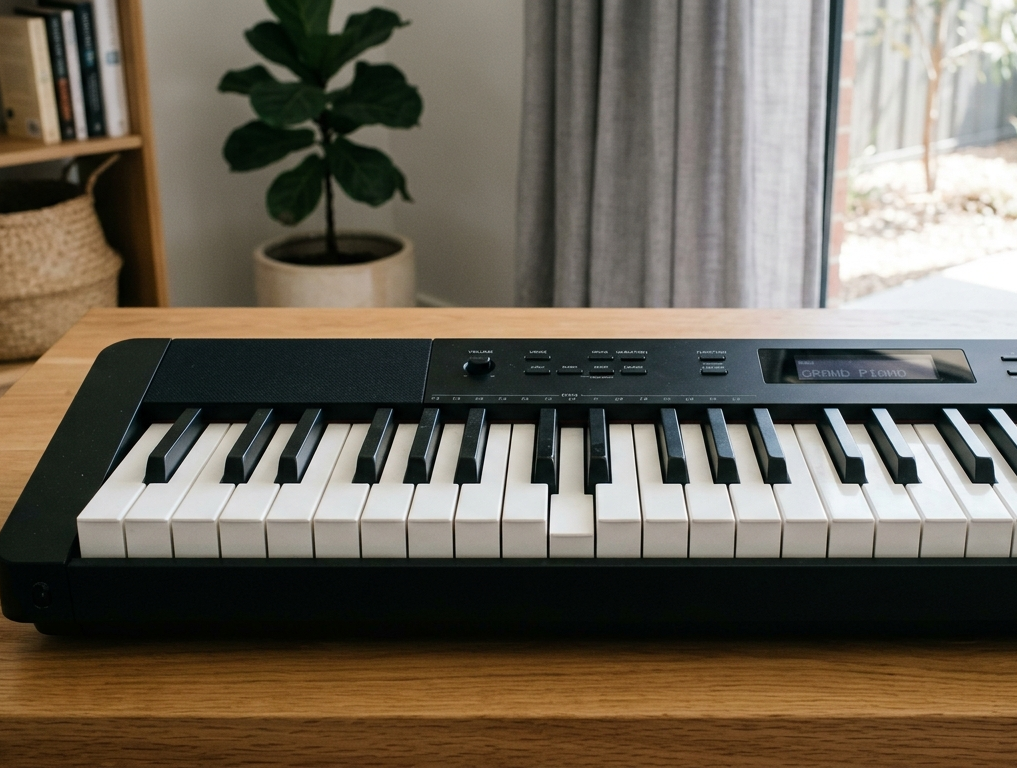
Physical impacts, drops during transport, or long-term warping from Queensland’s humidity can cause the keybed itself to shift or warp. When the keybed is misaligned, keys may stick in the down position, return slowly, or feel noticeably different to surrounding keys.
Signs of mechanical keybed issues:
- Keys that feel physically different to their neighbours
- Keys that don’t return to their resting position after being pressed
- Visible misalignment or unevenness across the keyboard surface
5. Circuit Board or Mainboard Faults
Digital piano keys are managed by internal circuit boards that process the signals from every sensor. If a section of the mainboard fails, entire zones of the keyboard can go silent simultaneously. This is more common in older instruments or those that have been exposed to moisture or power surges.
Circuit board faults are the most complex category of digital piano repair and require full diagnostic testing to confirm before any component work begins.
6. Sticky or Jammed Keys From Humidity and Temperature
Queensland’s climate creates specific challenges for keyboard instruments. High humidity causes wooden and plastic keybed components to expand and swell, while extreme heat can cause adhesives to soften and keys to bind. This is an underappreciated cause of key problems on the Sunshine Coast, particularly in homes without climate control.
If your keys started sticking around the same time your region experienced a spell of hot, humid weather, the environment is likely a significant factor.
Should You Try to Fix It Yourself?
It’s tempting to open up a digital piano and have a look, but most key faults involve delicate components that are easy to damage without the right tools and experience. Opening the case without proper grounding can cause static discharge damage to sensitive circuits. Incorrect reassembly of the keybed can introduce new mechanical problems alongside the original fault.
For anything beyond basic external cleaning, professional digital piano repair is almost always the right call. It’s faster, safer, and more likely to result in a complete fix rather than additional damage.
For a broader look at all the warning signs that your instrument needs attention, our blog onsigns your digital piano needs repair covers the full picture before you decide whether to bring it in.
How Brocky’s Electronics Approaches Digital Piano Key Repairs
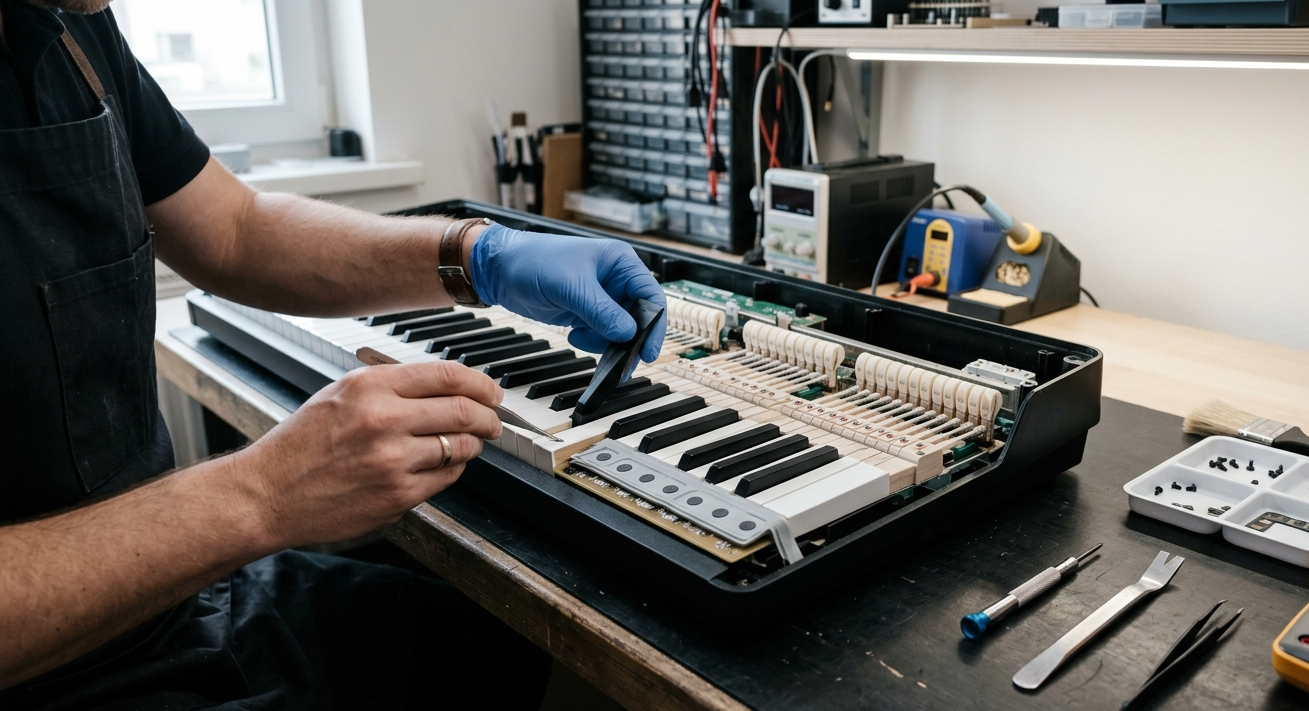
When you bring a digital piano to us for digital piano repair, our technicians start with a full diagnostic assessment before any work begins. We identify exactly which components are at fault, explain the options clearly, and give you an honest quote before touching anything.
Our digital piano repair service on the Sunshine Coast covers:
- Rubber contact strip cleaning and replacement
- Keybed disassembly, cleaning, and realignment
- Individual key sensor testing and replacement
- Circuit board diagnostics and component repair
- Full keyboard performance testing after every job
We service all major brands including Yamaha, Roland, Casio, Kawai, Korg, and Nord, and we carry out every repair with the care and precision the instrument deserves.
If your instrument also has other electronics issues beyond the keyboard itself, our broader television and electronics repair service demonstrates the depth of technical experience our team brings to every job.
See what other Sunshine Coast musicians and families think of our work by reading reviews from our happy customers before you get in touch.
Book Your Digital Piano Repair Today
Don’t let faulty keys keep you or your family away from the piano. Whether it’s one unresponsive key or a full section that’s gone silent, the team at Brocky’s Electronics is ready to diagnose and fix the problem properly.
Explore everything we repair and service at Brocky’s Electronics, from digital pianos and music equipment to valve amplifiers and televisions.
Visit us at Shop 6/12 Newspaper Place, Maroochydore QLD 4558, call us on 1800 544 644 or text 0422 394 174, Monday to Friday between 8:30am and 4:00pm.
Get in touch to book your digital piano repair assessment or get a no-obligation quote.
FAQs
1. Can a single unresponsive key be repaired, or does the whole keyboard need replacing?
In most cases, individual keys can be repaired without replacing the entire keyboard. The fix depends on the cause, whether it’s a rubber contact, sensor, or mechanical issue, and our technicians will confirm exactly what’s needed after a proper assessment.
2. How long does a digital piano key repair take?
Most key repairs are completed within 3 to 7 business days. We’ll give you a realistic timeframe and confirm it before starting any work.
3. My keys started sticking after a hot spell. Is that related to the weather?
Yes, very likely. Queensland’s heat and humidity cause keybed components to expand and bind. This is a common issue on the Sunshine Coast and is usually very fixable with professional attention.
4. Is it worth repairing an older digital piano with key problems?
In most cases, yes. Quality instruments from brands like Yamaha, Roland, or Kawai are worth repairing, and the cost of key repair is almost always significantly less than replacement. We’ll give you an honest assessment before recommending any work.
5. What causes keys to trigger sounds randomly without being pressed?
This is usually a sensor fault or a mainboard issue. It can also be caused by debris beneath the key creating pressure on the sensor. A full diagnostic assessment will identify the exact cause.