
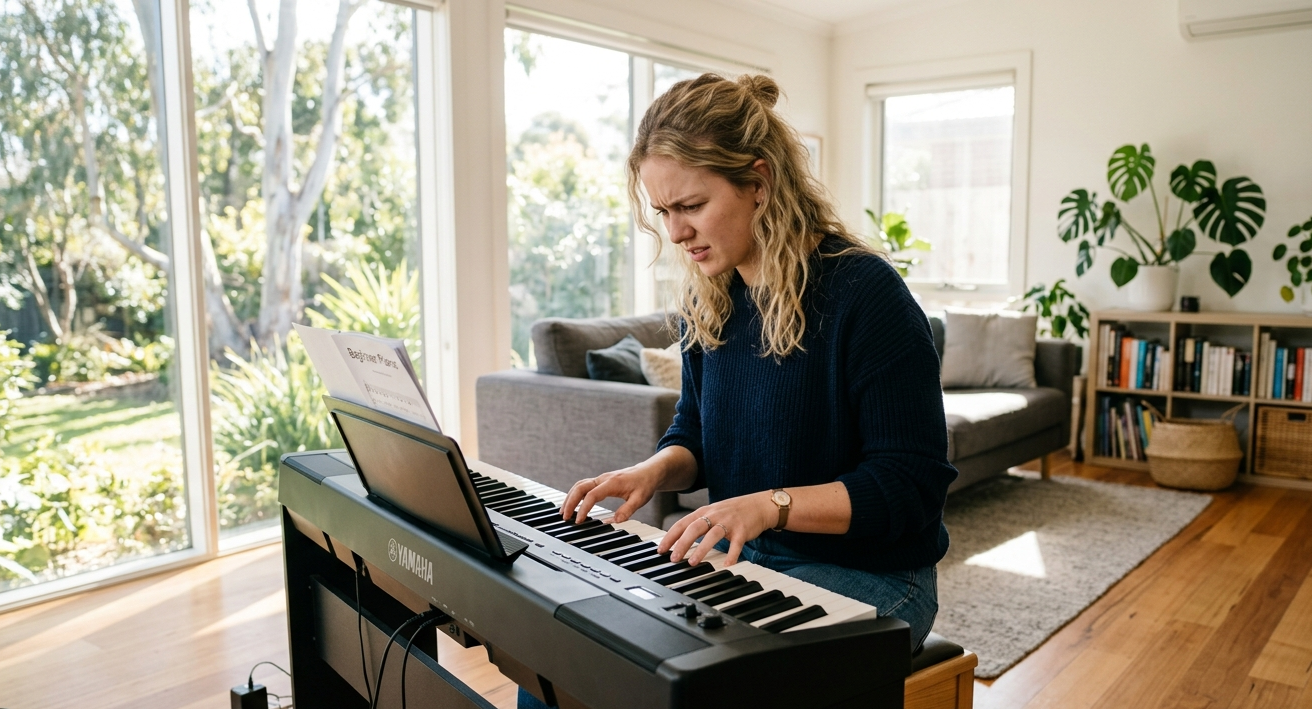
A digital piano is one of the more significant investments a musician or family can make. Whether it’s a Yamaha Clavinova sitting in the lounge room, a Roland stage piano used for gigs, or a Casio used by a student learning their first scales, you want it working reliably every single time you sit down to play.
The problem is that digital pianos, like all electronics, develop faults over time. Some issues are minor and easy to spot. Others creep up gradually until one day the instrument simply doesn’t perform the way it should. The earlier you catch the warning signs, the cheaper and simpler the digital piano repair tends to be.
At Brocky’s Electronics, we carry out digital piano repair for musicians and families across the Sunshine Coast every week. Here are the most common signs that your instrument needs professional attention.
1. Keys That Stick, Feel Wrong, or Don’t Respond
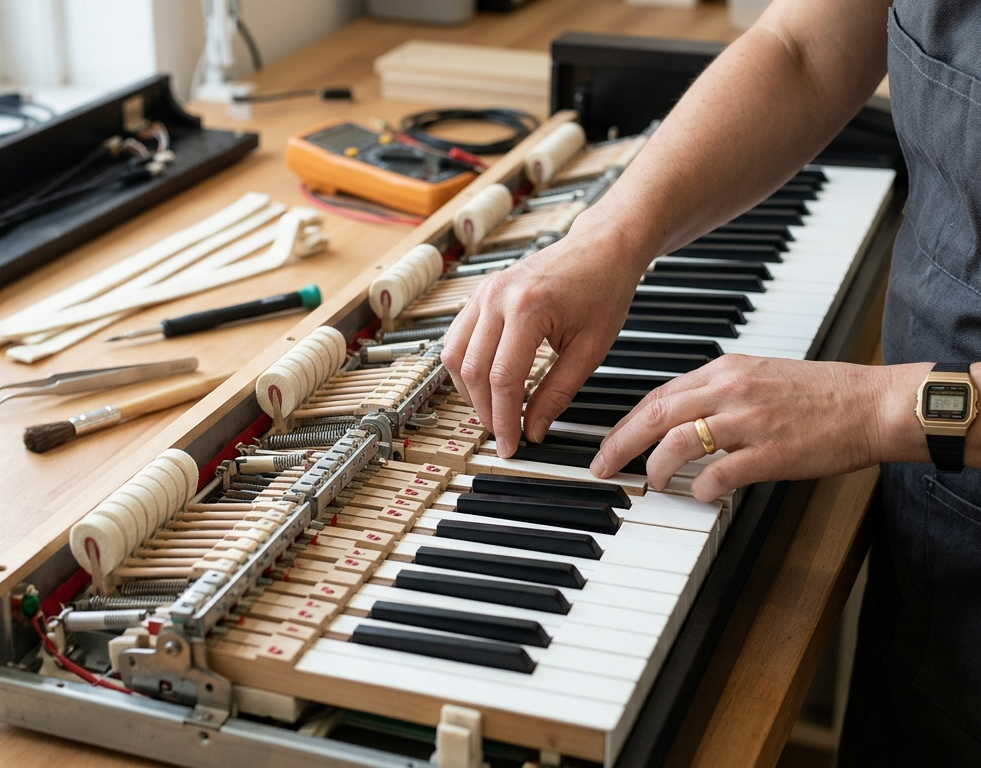
Unresponsive or sticky keys are one of the most common reasons people bring a digital piano in for repair. If a key feels stiff, produces no sound, or triggers inconsistently depending on how hard you press it, something is wrong beneath the surface.
Common causes include:
- Worn or failed rubber contact strips beneath the keys
- Debris or liquid residue lodged under the keybed
- Damaged hammer mechanisms on weighted key instruments
- Sensor failure on individual note triggers
Sometimes a thorough clean resolves the problem. Other times the contact strips or key sensors need replacing. If more than one key is affected, or the issue keeps coming back, a professional inspection is the right next step.
Our dedicated blog on why digital piano keys stop working covers this fault in more detail and is worth reading if keys are your main concern.
2. No Sound, or Sound That Cuts In and Out
If your digital piano powers on but produces no audio, or the sound drops in and out unpredictably, something in the audio chain has failed.
Possible causes:
- Damaged internal speakers or speaker connections
- Failing audio amplifier circuitry
- Loose or corroded internal wiring
- Malfunctioning volume controls or output jacks
One thing worth checking first: does the piano produce sound through headphones but not through the built-in speakers? If so, the speakers or amplifier circuit are the likely culprits. Either way, this kind of fault needs a technician to diagnose properly.
3. Buzzing, Crackling, or Distorted Audio
Strange noises coming through your digital piano’s speakers are a red flag, even if the instrument still technically produces sound. Buzzing, crackling, distortion, or a persistent hum are signs of internal component issues that will almost always get worse if ignored.
What tends to cause these sounds:
- Damaged speaker cones or driver connections
- Failing capacitors in the audio output circuit
- Ground loop interference from connected devices
- Loose internal wiring rattling against other components
As Sweetwater explains in their electronic instrument repair overview, audio distortion in electronic instruments is rarely a surface-level issue. It typically points to component-level faults that require proper diagnostic tools and experience to resolve safely.
4. Pedals That Don’t Work Properly
Most digital pianos include at least a sustain pedal, and many have a full three-pedal setup. If pressing a pedal has no effect, behaves inconsistently, or triggers the wrong function, the issue could be in the pedal itself or in the internal connector.
Common pedal faults:
- Faulty or frayed pedal cable and connector
- Incorrect polarity settings in the instrument’s menu
- Oxidised or dirty pedal contacts
- Damaged internal input socket on the piano
Check the polarity setting in your instrument’s settings menu first, as this is a simple software fix. If that doesn’t resolve it, the hardware needs a proper look.
5. Notes Playing on Their Own or Erratic Behaviour
If your digital piano starts triggering notes without being touched, plays stuck notes that won’t release, or behaves unpredictably during performance, this is a serious warning sign.
Possible causes:
- Mainboard or processor fault
- Moisture damage or internal corrosion
- Power supply instability
- Electrostatic discharge affecting internal circuits
Phantom notes and erratic behaviour rarely resolve on their own. Left unattended, they tend to point toward a fault that will eventually cause the instrument to fail completely. A professional assessment is always the right call here.
6. Power Problems or Random Shutdowns
A digital piano that won’t power on, shuts down unexpectedly mid-session, or has a flickering display is experiencing a power-related fault. This is not something to troubleshoot with DIY methods.
Likely causes:
- Faulty or failing power adapter
- Blown internal fuse or voltage regulator
- Overheating components causing thermal shutdown
- Loose internal power connections
If unplugging and restarting the instrument temporarily fixes the problem, that’s a sign of an underlying fault, not a resolved one. Intermittent power issues almost always become permanent failures eventually.
7. Display Screen Issues
Modern digital pianos use LED or LCD screens to manage voices, rhythms, settings, and connectivity. A dim, flickering, missing-pixel, or completely blank screen affects usability and can lock you out of key functions.
Causes include:
- Display cable failure or loose ribbon connector
- Cracked screen or backlight failure
- Firmware corruption affecting the display output
- Mainboard fault affecting the graphics circuit
A firmware update occasionally resolves display glitches. If the hardware itself is involved, professional digital piano repair is the only reliable fix.
8. Connectivity and Software Problems
Digital pianos with USB, MIDI, or Bluetooth connectivity offer powerful features for recording and performance. When those connections stop working, freeze during use, or show error messages, it’s usually a sign of a port fault, firmware issue, or internal circuit problem.
As Wikipedia’s overview of the digital piano explains, modern instruments rely on sophisticated onboard electronics and firmware to deliver their full range of features, meaning connectivity faults often require technician-level diagnosis to resolve properly.
What to try first:
- Update the firmware from the manufacturer’s official website
- Test with a different USB cable or port
- Perform a factory reset after backing up your settings
If none of these steps resolve the issue, the internal interface circuit or mainboard likely needs attention.
9. Physical Damage, Drops, or Liquid Spills
If your digital piano has suffered a fall, taken a knock during transport, or had liquid spilled on or into it, have it assessed even if it appears to be working normally. Internal damage from impacts or moisture isn’t always immediately visible but can cause progressive failures over weeks or months.
What to watch for after an incident:
- Keys misaligned or catching against each other
- Unusual rattling or movement inside the housing
- Cracks in the casing or keybed
- Intermittent faults that weren’t present before
Early intervention after a physical incident almost always results in a simpler, cheaper digital piano repair than waiting until a fault develops fully.
Why Sunshine Coast Musicians Trust Brocky’s Electronics
We service all major digital piano brands across the Sunshine Coast, including Yamaha, Roland, Casio, Kawai, Korg, and Nord. Whether the fault is a single unresponsive key or a complete internal failure, we diagnose it accurately and give you honest advice before any work begins.
If your instrument has valve amplifier components or you need other electronics repaired alongside your piano, we also offer a dedicated valve amplifier repair service for musicians who use both.
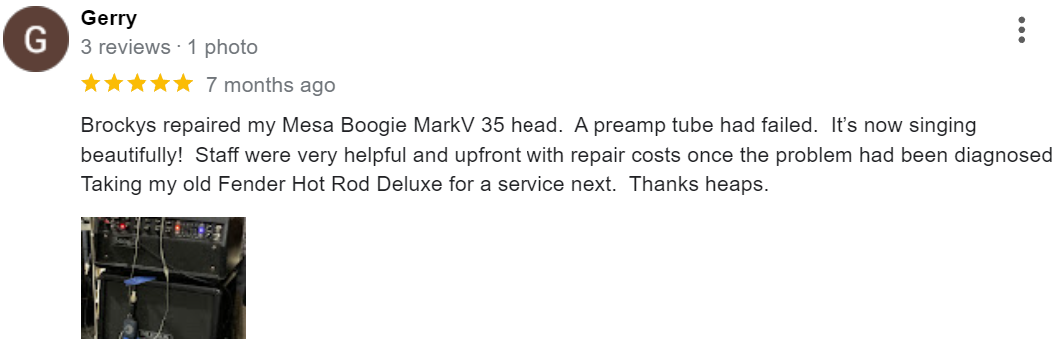
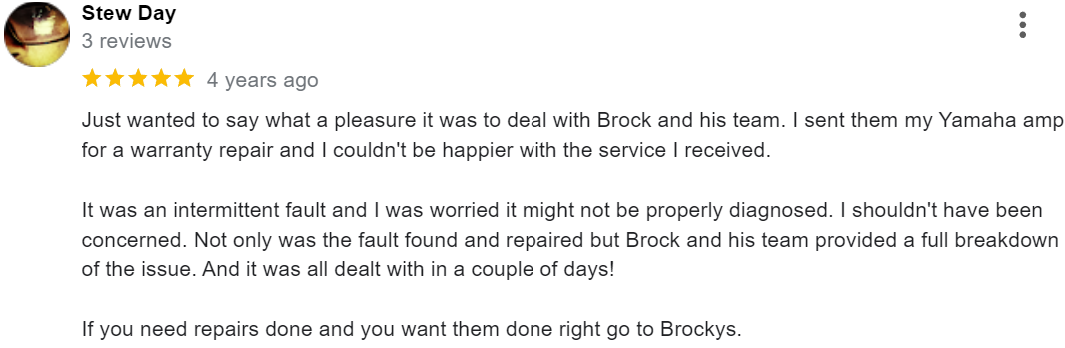
Don’t just take our word for it, see what Sunshine Coast locals say about the work we do before you book.
Book Your Digital Piano Repair Today
If your instrument is showing any of these signs, don’t wait. Early digital piano repair is almost always simpler and more affordable than letting a fault develop into a full breakdown.
Explore everything we repair and service at Brocky’s Electronics, from digital pianos and music equipment to televisions and valve amplifiers.
Visit us at Shop 6/12 Newspaper Place, Maroochydore QLD 4558, call us on 1800 544 644 or text 0422 394 174, Monday to Friday between 8:30am and 4:00pm.
Get in touch to book your digital piano repair assessment or get a no-obligation quote.
FAQs
1. How do I know if my digital piano is worth repairing?
In most cases, yes, especially for quality brands like Yamaha, Roland, or Kawai. We assess every instrument honestly and advise you on cost versus replacement value before any work begins.
2. Can liquid damage to a digital piano be repaired?
Often yes, depending on how quickly it’s addressed and the extent of the damage. Bring it in as soon as possible, the faster we assess it, the better the outcome tends to be.
3. How long does a digital piano repair take?
Most repairs are completed within 3 to 7 business days. Complex faults or parts sourcing may take a little longer, and we’ll always give you a realistic timeframe upfront.
4. Do you repair all brands of digital piano?
Yes. We service Yamaha, Roland, Casio, Kawai, Korg, Nord, and more. If it’s a digital piano or electronic keyboard, we can most likely repair it.
5. Can you repair digital pianos with weighted keys?
Absolutely. Weighted key mechanisms require specific knowledge and parts, and our technicians are experienced with both standard and weighted key digital piano repairs.