

Queensland’s climate is brilliant for beach days and outdoor living, but it’s genuinely tough on home electronics. The combination of summer heat, coastal humidity, and the Sunshine Coast’s subtropical conditions creates an environment where televisions, amplifiers, computers, digital pianos, and audio equipment all age faster and fail more often than they would in cooler, drier parts of the country.
At Brocky’s Electronics, we see the results of heat and humidity damage on home electronics every single week. The frustrating part is that most of it is preventable. Here’s what’s actually happening to your gear, and what you can do about it.
How Heat Damages Home Electronics
Every piece of home electronics generates heat when it runs. That’s completely normal. The problem arises when ambient temperatures rise to the point where devices can’t dissipate their own heat fast enough, and internal temperatures climb beyond what the components were designed to handle.
As Wikipedia’s overview of thermal management of electronics explains, electronic components have specific operating temperature limits, and sustained operation beyond those limits causes accelerated degradation, reduced performance, and ultimately component failure.
Here’s what heat does to your home electronics over time:
- Capacitors fail faster — capacitors are heat-sensitive components found in virtually every electronic device. High operating temperatures dramatically shorten their service life, causing them to bulge, leak, or fail completely
- Solder joints crack — repeated heating and cooling cycles cause the solder connections on circuit boards to expand and contract, eventually cracking and causing intermittent faults
- Thermal paste degrades — in computers, televisions, and amplifiers, the thermal paste between heat-producing components and their heatsinks dries out and loses effectiveness, reducing heat transfer efficiency
- Display damage accumulates — OLED and LCD screens develop permanent discolouration and bright spots from sustained heat exposure
- Battery degradation accelerates — rechargeable batteries in laptops, remotes, and portable devices lose capacity significantly faster at elevated temperatures
The most visible sign of heat stress in home electronics is unexpected shutdowns or restarts as the device’s thermal protection circuit kicks in. If your TV, amplifier, or computer shuts itself off during use, overheating is almost certainly the cause.
How Humidity Damages Home Electronics
Humidity is a slower, less visible threat than heat, but in many ways it’s more destructive. Moisture in the air attacks the metal components, circuit boards, and connectors inside your home electronics through a process of electrochemical corrosion.
The mechanism is straightforward: moisture creates a thin conductive layer on metal surfaces, enabling electrical currents to flow where they shouldn’t. That causes corrosion to accelerate, connections to fail, and short circuits to develop progressively over time.
Specific ways humidity damages home electronics on the Sunshine Coast:
- Circuit board corrosion — copper traces and solder points oxidise, increasing resistance and causing signal failures and intermittent faults
- Connector degradation — HDMI ports, audio jacks, and USB connectors corrode and become unreliable, causing the intermittent connection problems many Sunshine Coast households assume are device faults
- Condensation damage — moving a device from air-conditioned space into warm humid air causes condensation to form on cold internal surfaces, potentially causing immediate short circuits if the device is powered on before it equalises
- Mould growth — in severe humidity conditions, biological growth develops on circuit boards and speaker cones, causing both electrical failures and audio quality degradation
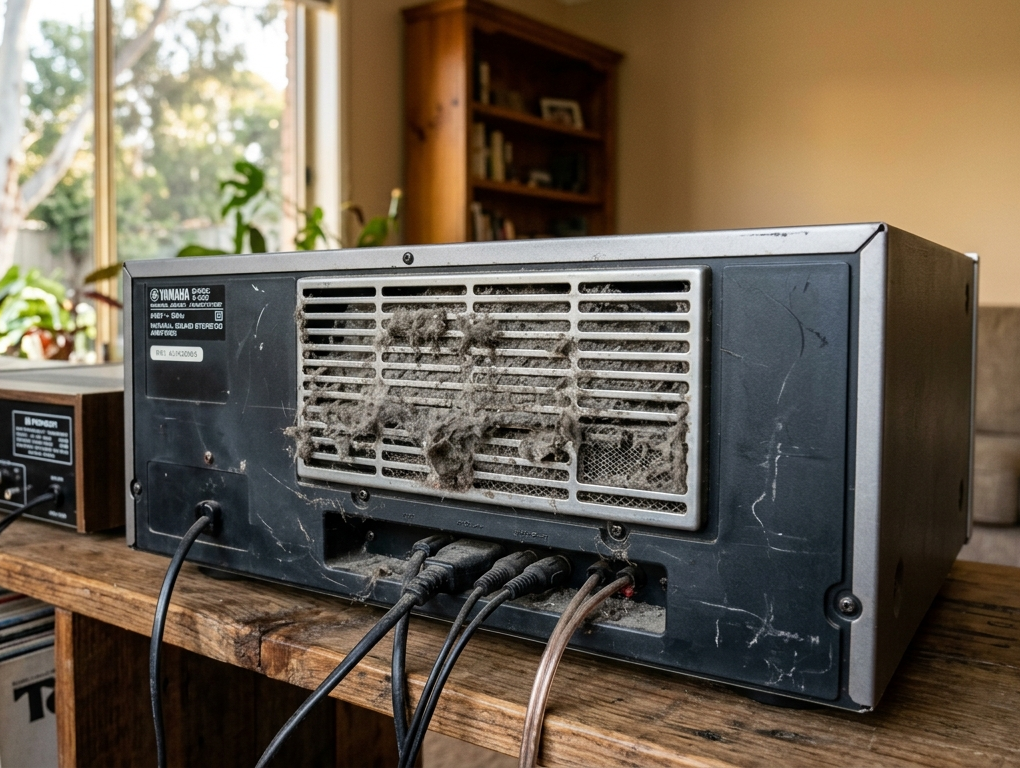
- Dust and moisture combination — humid air causes dust to clump rather than pass through, blocking ventilation and compounding overheating problems
For a detailed guide on protecting stored equipment from these effects, our blog on best practices for storing electronics in humid climates covers storage-specific strategies in depth.
Which Home Electronics Are Most Vulnerable?
Not all devices are equally susceptible to heat and humidity damage. These are the home electronics we see most frequently affected on the Sunshine Coast:
Valve Amplifiers
Valve amplifiers operate at very high internal temperatures by design, which makes them particularly sensitive to ambient conditions. High surrounding temperatures combined with poor ventilation significantly shorten valve life and stress the associated circuitry. Our valve amplifier repair and servicing covers humidity and heat-related faults alongside standard maintenance.
Televisions
Modern flat-panel televisions have ventilation requirements that many Sunshine Coast households inadvertently ignore, particularly when TVs are mounted in enclosed entertainment units or placed in rooms without air conditioning. The result is accelerated panel degradation and mainboard failures.
Audio Equipment and Mixing Consoles
Faders, potentiometers, and connectors in audio equipment are highly susceptible to humidity-accelerated corrosion, causing the crackling, dropout, and unresponsive control problems that are among the most common faults we diagnose.
Digital Pianos and Keyboards
Queensland’s humidity causes wooden and plastic keybed components to swell and bind, while moisture infiltration into the electronics causes key sensor failures and intermittent notes. This is particularly pronounced in instruments stored in rooms without climate control.
Computers and Laptops
Thermal paste degradation from heat cycling, fan failures from dust and humidity combination, and corrosion on charging connectors are the most common humidity and heat-related faults we see in computing equipment on the Sunshine Coast.
Practical Steps to Protect Your Home Electronics
These measures genuinely reduce heat and humidity-related damage to your home electronics:
Temperature management:
- Use air conditioning in rooms with high-value electronics during hot weather
- Ensure at least 5 to 10 centimetres of clearance around devices for heat dissipation
- Never enclose heat-generating devices in sealed cabinets without ventilation
- Keep devices away from direct sunlight, particularly west-facing windows in the afternoon
- Never stack heat-producing devices directly on top of each other
Humidity control:
- Use a quality dehumidifier in rooms with significant electronics, targeting 40 to 50 percent relative humidity
- Avoid storing devices in garages, under-house storage, or un-air-conditioned rooms during summer
- Allow devices to reach room temperature before powering on after being moved between temperature zones
- Use silica gel desiccant packets inside storage cases and equipment bags
Maintenance habits:
- Clean ventilation vents with compressed air every three to six months
- Inspect connectors and ports for visible oxidation regularly
- Schedule professional servicing annually for high-value equipment like amplifiers, mixing consoles, and digital pianos
As OriginCorp’s analysis of how humidity affects electronics corrosion confirms, corrosion risk accelerates significantly above 60 percent relative humidity, making consistent environmental control particularly important in Queensland’s coastal climate.
When Heat or Humidity Has Already Caused Damage
If your home electronics are already showing signs of heat or humidity damage, professional assessment is the right next step. Attempting to clean corroded circuit boards or resolve internal thermal faults without proper equipment and experience typically makes the situation worse.
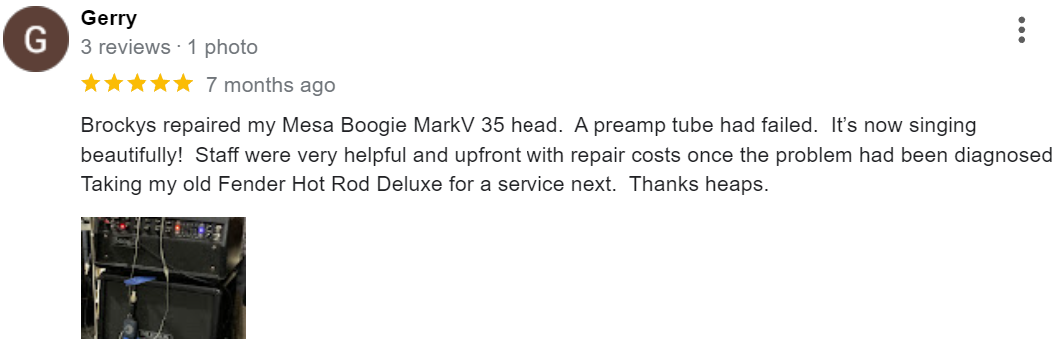
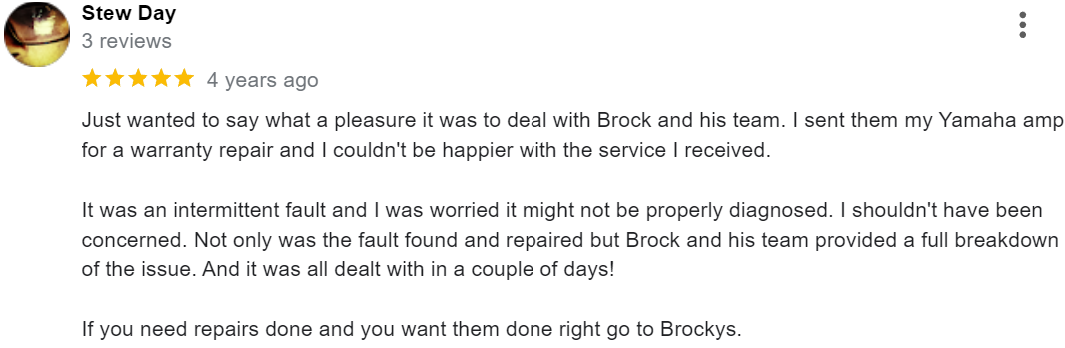
At Brocky’s Electronics, we carry out humidity and heat damage assessments, component-level cleaning, and repairs for all types of home electronics across the Sunshine Coast. See what Sunshine Coast locals say about our work before you get in touch.
Explore the full range of electronics repair and servicing we offer at Brocky’s Electronics, from televisions and audio equipment to valve amplifiers and digital pianos.
Visit us at Shop 6/12 Newspaper Place, Maroochydore QLD 4558, call us on 1800 544 644 or text 0422 394 174, Monday to Friday between 8:30am and 4:00pm.
Get in touch to book your assessment or get a no-obligation quote on any repair work.
FAQs
1. What temperature is too hot for home electronics?
Most home electronics operate safely up to around 35 degrees Celsius ambient temperature. Rooms without air conditioning on hot Queensland days regularly exceed this, causing internal components to overheat.
2. How do I know if humidity has damaged my electronics?
Watch for intermittent faults, visible oxidation on connectors, crackling in audio equipment, or devices that behaved normally before a humid period but now perform erratically.
3. Can humidity-damaged electronics be repaired?
Often yes. Early-stage corrosion is frequently repairable through professional cleaning and component replacement. Severe long-term corrosion may cause irreparable circuit board damage.
4. Is it safe to use a dehumidifier near electronics?
Yes, it’s beneficial. Maintaining relative humidity between 40 and 50 percent significantly reduces corrosion risk without affecting how your devices operate.
5. Why does my TV or amplifier shut off unexpectedly in summer?
Unexpected shutdowns in hot weather almost always mean thermal protection has activated. Improving ventilation around the device usually resolves it, though internal cleaning may also be needed.