
That crackle, pop or fizz coming from your speaker isn’t just annoying. It’s a warning sign. If you’re wondering what causes speaker crackling, the answer is often a loose cable or a dirty connection, but it can also point to a damaged cone or an amplifier fault. Whether it’s a home stereo, a Bluetooth speaker or a PA system, and whether you want speaker repair Sunshine Coast musicians and families can rely on, this guide covers what to check first, what causes the noise and when to book a repair.
What Does Speaker Crackling Actually Mean?
Speaker crackling usually means the signal is being interrupted somewhere. When the speaker itself isn’t damaged, the problem is typically a faulty connection somewhere in the signal chain, according to pro audio manufacturer Galaxy Audio’s guide to crackling speakers. That could be a loose plug, corrosion, a poor solder joint or a dirty control.
The good news is that connection problems are often easy to find. The bad news is that ignoring them can lead to bigger, costlier faults.
Common Causes of Speaker Crackling
Loose or Faulty Connections
Plugs and terminals that have worked loose are the most common culprit. A worn socket, a half-inserted cable or a corroded connector can all interrupt the signal and cause that familiar crackle.
Damaged Cables
Cables get bent, trodden on and pulled over time. A frayed speaker wire or a cable with an internal break will crackle when it moves.
Dirty Volume Controls
If the noise only appears when you turn a knob, the control (a potentiometer) is likely dirty. It’s a very common fault in older amps and mixers.
A Damaged Speaker Cone or Driver
The speaker driver is the part that actually moves air, and it includes the cone and voice coil. A tear, crack or rubbing voice coil produces a harsh, scratchy sound, especially at higher volumes.
Overdriving the Amplifier
Pushing an amplifier into distortion can quickly damage speakers. If the crackle appears only at high volume, lower the volume and see if it stops.
An Amplifier or Circuit Fault
Failing components, cold solder joints or a faulty board inside a powered speaker or amp can all cause crackling that no cable swap will fix. Humid coastal air can make these faults worse over time.
Simple Checks to Try First
Before you book a repair, a few safe checks can narrow things down:
- Lower the volume. If the crackle disappears, you may be overdriving the system
- Try another source. A different phone, player or input shows whether the fault is the source or the speaker
- Wiggle the cables. Gently move the cable near each connection while audio plays. If the crackle changes, you’ve found the faulty connection
- Swap the cable. A known good cable quickly rules out a damaged one
- Check the cone. Look for visible tears or cracks, and inspect the wire connections for fraying
- Turn the knobs. If the noise only happens when you adjust a control, work it through its range a few times to clean the contacts
Please don’t open a powered speaker or amplifier. They can hold dangerous voltage inside, even when switched off.
Speaker Not Working at All?
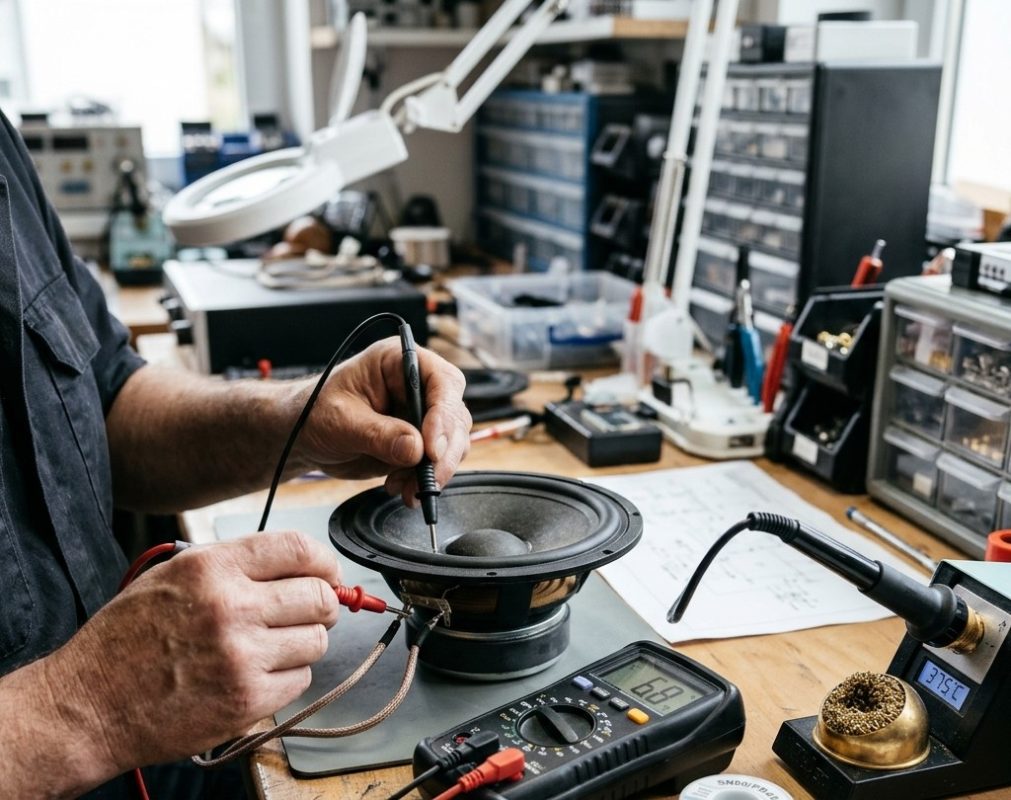
Crackling is often the first sign before a speaker stops entirely. If your speaker not working is the problem now, watch for these signs that point to something bigger:
- No sound from one or both speakers
- Constant crackling, buzzing or humming at any volume
- A burning smell or visible damage
- Sound that cuts in and out, which can also be an amp problem (see our guide on why an amplifier keeps cutting out)
- Distortion that returns after a cable swap
When to Book Audio Equipment Repair Sunshine Coast
If the checks haven’t fixed it, it’s time for a technician. Our audio equipment repair Sunshine Coast service covers speakers and PA systems, mixers, microphones, and studio and DJ gear. For instruments and amps, see our broader music equipment repair page.
A technician can test the whole signal path, find the faulty part and tell you honestly whether repairing it makes sense.
Why Choose Brocky’s Electronics
At Brocky’s Electronics, our workshop is in Maroochydore, and we repair audio gear, music equipment and TVs for customers across the Sunshine Coast. Here’s what you can expect:
- A quote before any work starts
- A 12-month warranty on every repair
- Online booking, plus flat-fee pickup and delivery if you can’t bring the gear in
- Honest advice on whether repair is worthwhile
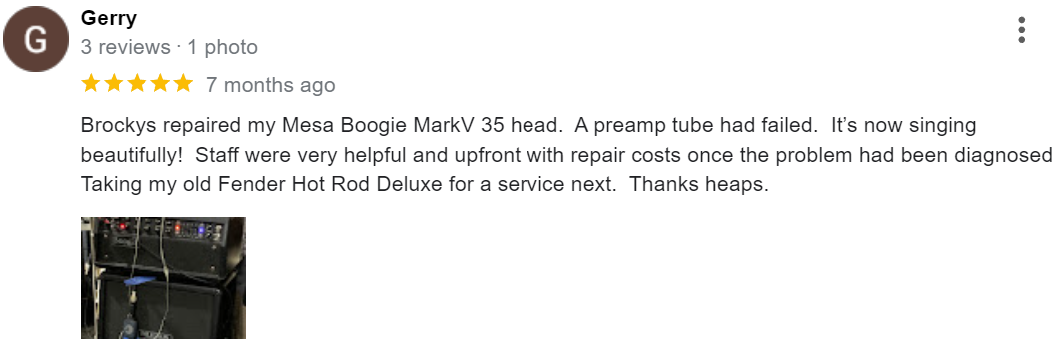
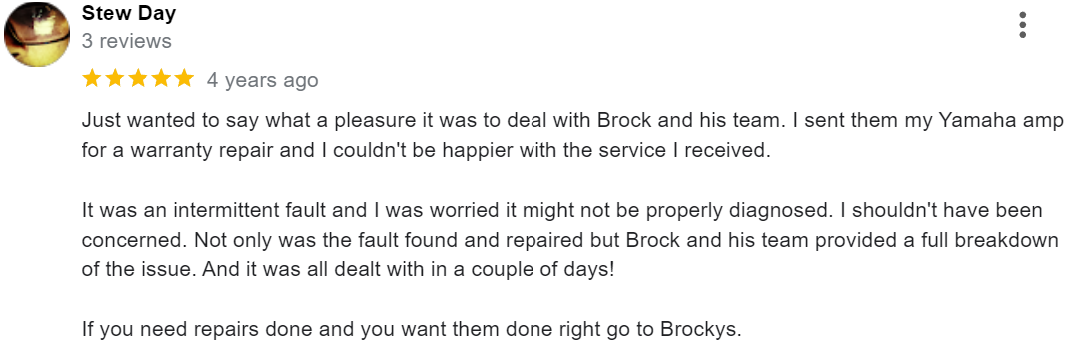
See what local customers say on our Google Business Profile.
FAQs
1. Why is my speaker crackling?
Usually a loose or dirty connection, a damaged cable or a dirty control. A torn cone or amplifier fault is also possible.
2. Why is my speaker crackling at high volume?
You may be overdriving the amplifier or speaker. Lower the volume, and if it persists, the speaker may be damaged.
3. Can a crackling speaker be repaired?
Often, yes. Connection, cable and control faults are usually quick fixes, and a technician can assess cone or amp damage.
4. Is it safe to keep using a crackling speaker?
Not for long. Distortion can damage the speaker further, so turn it down and get it checked.
5. Should I replace a crackling speaker or repair it?
It depends on the speaker and the fault. A technician can tell you if repair costs make sense.
Final Thoughts
Speaker crackling is rarely random. Most of the time it points to a connection, a cable or a control you can find with a few simple checks. But if the noise keeps coming back or your speaker stops working altogether, don’t wait for it to get worse. Contact us today or book a repair online and we’ll get your sound back to normal.