
You flick the standby switch, wait for the valves to warm up, and instead of that sweet, creamy tone you get a low drone sitting underneath everything. If you’ve got valve amp humming through the speaker (or a harsh valve amp buzzing even with the guitar unplugged), you’re far from the only one. A bit of noise is normal in a tube amp, but a hum that keeps getting louder usually points to something fixable.
Here’s what’s likely going on, what you can safely check, and when to book valve amp repair Sunshine Coast players can trust.
Quick answer: Valve amp humming is usually caused by a worn or noisy valve, ageing filter capacitors, a grounding fault or interference from nearby electronics. If the hum is loud, getting worse or comes with crackling, switch the amp off and have a technician check it.
Hum vs Buzz: What’s the Difference?
Technicians ask this first, because it narrows things down fast. A hum is a low, steady drone. A buzz is harsher and higher, often with a gritty edge.
Australian mains power runs at 50Hz, so mains hum typically sits at 100Hz. That’s the deep rumble you can almost feel through the speaker, as explained in this overview of mains hum. It’s also common to get a bit of both at once.
Is Some Tube Amp Hum Normal?
Yes. Valve amps use hot glass valves, big transformers and high-gain circuits, so a faint tube amp hum or hiss at idle is part of the deal, especially in older designs.
It’s time to worry when the noise:
- Is louder than it used to be
- Appears suddenly
- Changes when you touch the controls
- Stays loud with the volume turned right down
Common Causes of a Guitar Amp Humming Noise
Worn or Noisy Valves
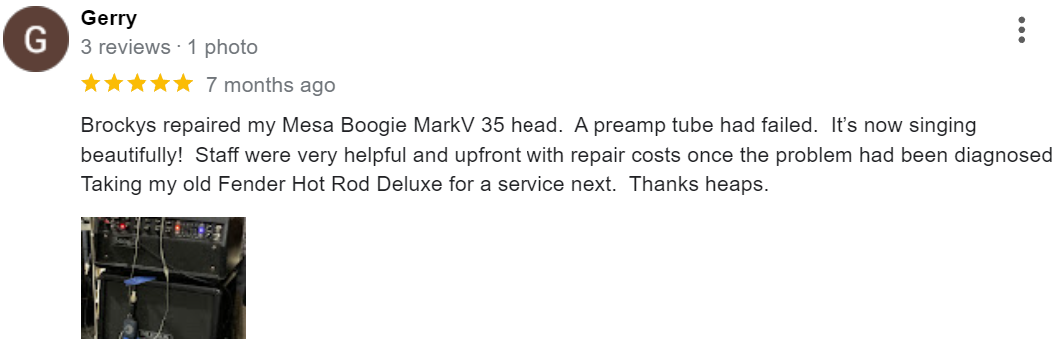
Valves wear out. A tired preamp valve can turn microphonic (it rings when you tap it), and heater-to-cathode leakage inside a valve can feed hum into the signal. A failing power valve can add buzz too. One Mesa Boogie Mark V owner who came to us had exactly this, a failed preamp valve that was sorted at the bench.
Ageing Filter Capacitors
Filter capacitors smooth out the amp’s power supply. When they dry out with age, a deep 100Hz hum creeps in. It’s common in amps that are decades old, and it’s not a DIY job, because these capacitors can hold a dangerous charge even when the amp is unplugged.
Grounding Faults and Ground Loops
A poor earth connection, or a ground loop (when your amp, pedals and a mixer create more than one path to earth), is a classic cause of hum. Never “fix” it by snapping off the earth pin or using a cheater plug. Lethal voltage can end up on the chassis.
Interference From Other Gear
Dimmers, fluorescent lights, phones, routers and cheap pedal power supplies can all be picked up by your pickups and leads. Single-coil guitars are the usual culprits.
Faulty Jacks, Leads and Connections
A worn input jack or a tired lead can add hum or buzz. These are cheap and easy to rule out before blaming the amp.
Quick Checks Before You Book a Repair
Keep the amp switched off while you swap leads or gear.
- Unplug everything and listen. If the noise stays, the fault is probably inside the amp.
- Try a different guitar lead, and a different guitar if you’ve got one.
- Move away from lights, dimmers, routers and phones.
- Try another power point, and run pedals from a quality isolated supply.
- Turn the amp’s volume right down. Hum that stays loud points to the power supply or power section.
Then stop there. Don’t open the chassis, because valve amps hold dangerous voltages. For general electrical safety guidance in Queensland, the Electrical Safety Office is a good place to start.
Valve Amplifier Buzzing Fix: When to Service It
Book a service if:
- The hum is louder than before, or constant even at zero volume
- You hear crackling, popping or sudden dropouts
- A valve glows red, or you smell something burning
- The tone has gone dull or thin, or the volume has dropped
- The amp hasn’t been looked at in years
As a rule of thumb, a check-up every year or two keeps small faults small, especially if you gig regularly. A technician can test and replace valves, rebias power valves, replace capacitors and chase down grounding faults. Our guide on how amplifier repair can improve your sound quality explains what a proper service gets you.
Valve Amp Repair Sunshine Coast Musicians Rely On
Brocky’s Electronics has been fixing gear on the Sunshine Coast since 2006. Our Maroochydore workshop handles valve amp repair Sunshine Coast players need, along with guitar amps, hi-fi and other audio equipment repair. We repair at component level, and we’re an authorised service centre for brands like Fender, Gibson, Yamaha and Roland.
Every repair comes with a 12-month warranty, and we guarantee the repair will cost less than 60% of a new replacement. Can’t make it to the workshop? Pickup and delivery runs from Gympie to Caboolture, with most items a flat $99. You can see what local musicians say on our Google Business Profile.
FAQs
1. Why is my valve amp humming?
Most often it’s a worn or noisy valve, ageing filter capacitors, a grounding fault or interference from nearby electronics. Unplugging everything helps show whether the problem is inside the amp.
2. Is it normal for a tube amp to hum?
A faint hum or hiss is normal, especially in older designs. Hum that’s louder than before, constant at zero volume or paired with crackling needs checking.
3. Can I fix valve amp buzzing myself?
You can rule out leads, pedals and interference. Don’t open the amp, because the capacitors can hold dangerous voltage even when it’s unplugged.
4. How often should a valve amp be serviced?
A check-up every year or two is a sensible rule of thumb, more often if you gig or play heavily.
5. Where can I get valve amp repair on the Sunshine Coast?
Brocky’s Electronics in Maroochydore repairs valve amps with a 12-month warranty, and pickup and delivery is available from Gympie to Caboolture.
Final Thoughts
A little noise is part of a valve amp’s character, but valve amp humming that keeps getting louder isn’t something to ignore. Catching it early usually means a smaller bill and a healthier amp.
Ready to get your tone back? Contact the Brocky’s team or call 1800 544 644 , and we’ll get your amp sounding the way it should.