
You’re mid-riff, the tone’s finally sitting right, and then it happens a crackle, a pop, or the sound just drops out altogether. For guitarists across the Sunshine Coast, this is one of the most frustrating faults an amp can develop, and it rarely fixes itself.
The good news is that a crackling or cutting-out amp usually points to a specific, identifiable issue rather than a mystery fault. Whether you’re dealing with an occasional pop or your amp has gone completely silent mid-song, understanding what’s actually happening inside your gear is the first step. And if the problem persists, professional guitar amplifier repair Sunshine Coast musicians trust can properly diagnose it rather than leaving you to guess. This guide walks through what typically causes a guitar amp crackling sound, what you can check yourself, and when it’s time to bring in a specialist.
Common Causes of a Crackling or Cutting-Out Amp
Before assuming the worst, it helps to understand the usual suspects. In most cases, the issue comes down to one of the following.
1. Dirty or Worn Potentiometers
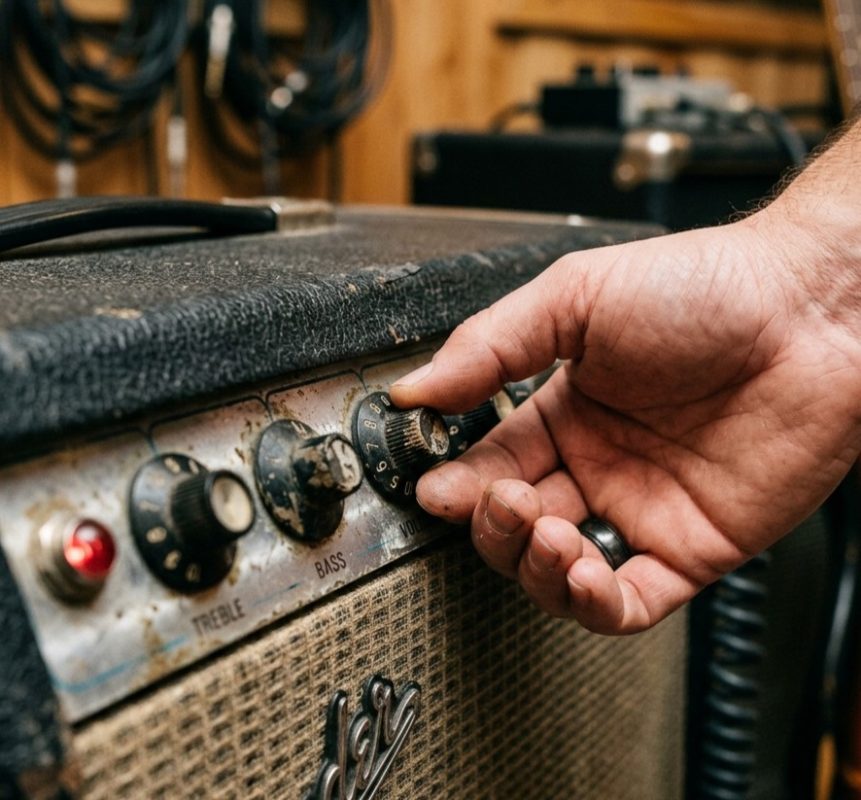
Every volume and tone knob on your amp relies on a component called a potentiometer, often just called a “pot” by musicians and technicians alike. Over time, dust, oxidation, or general wear can build up on the internal contacts, causing that familiar crackling or scratchy sound whenever the knob is turned. This is one of the most common and most fixable causes of amp crackle.
2. Oxidised or Loose Jack Sockets
Your guitar’s input jack, and any output jacks feeding a speaker cabinet, can develop oxidation on the internal contacts over time. This often causes intermittent signal loss, crackling when the cable is wiggled, or sound that cuts in and out unpredictably.
3. Failing or Faulty Tubes (Valve Amps)
If you’re running a valve amp, ageing or faulty tubes are a common culprit behind crackling, popping, or complete signal loss. Tubes naturally degrade over time and eventually need replacing, particularly in amps that see regular gigging or rehearsal use.
4. Loose Internal Solder Joints
Amps that have been transported frequently, dropped, or simply aged over years of use can develop cracked or loose solder joints inside the chassis. This can cause intermittent crackling that seems to come and go without an obvious pattern.
5. Cable and Connection Issues
Sometimes the amp itself isn’t the problem at all. A damaged instrument cable, a loose speaker cable connection, or a faulty power lead can all produce symptoms that look exactly like an internal amp fault.
What You Can Safely Check Yourself
Before booking a repair, a few basic checks can help narrow down the issue:
- Swap your instrument cable for a known-good one to rule out a simple cable fault
- Gently wiggle the cable at both ends while playing to check for intermittent connection issues
- Rotate volume and tone knobs a few times to see if crackling clears up temporarily (a sign of dirty pots)
- Check for a burning smell or discolouration around tubes or components, which signals a more serious issue
- Try a different power outlet to rule out an external power supply problem
If these checks don’t resolve the issue, or you notice anything that seems potentially unsafe, it’s time to stop troubleshooting and call in a professional.
Why DIY Repairs Inside the Amp Can Be Risky
It’s tempting to open up the chassis and start poking around once you’ve narrowed things down. However, amplifiers especially valve amps store dangerously high voltages inside filter capacitors, even when unplugged. This isn’t a job for guesswork or trial and error.
Attempting internal repairs without proper training and discharge equipment isn’t just risky for the amp; it can be genuinely dangerous. This is exactly why experienced guitar amplifier repair Sunshine Coast technicians exist to handle these repairs safely and correctly, rather than leaving musicians to take unnecessary risks with their own gear.
When to Book a Professional Repair
Some signs point clearly toward needing expert attention rather than further DIY troubleshooting:
- Crackling persists even after swapping cables and cleaning external connections
- You notice a burning smell, visible smoke, or unusual heat from the amp
- The fault has gradually worsened over weeks or months
- Your amp is a valve model showing signs of tube-related issues
- You rely on the amp professionally and can’t afford ongoing reliability issues
For a deeper technical understanding of what’s happening inside a faulty amp, Reverb’s guide on tube amp upkeep and maintenance is a genuinely useful reference for musicians wanting to understand their gear better before booking a repair.
How Brocky’s Electronics Can Help
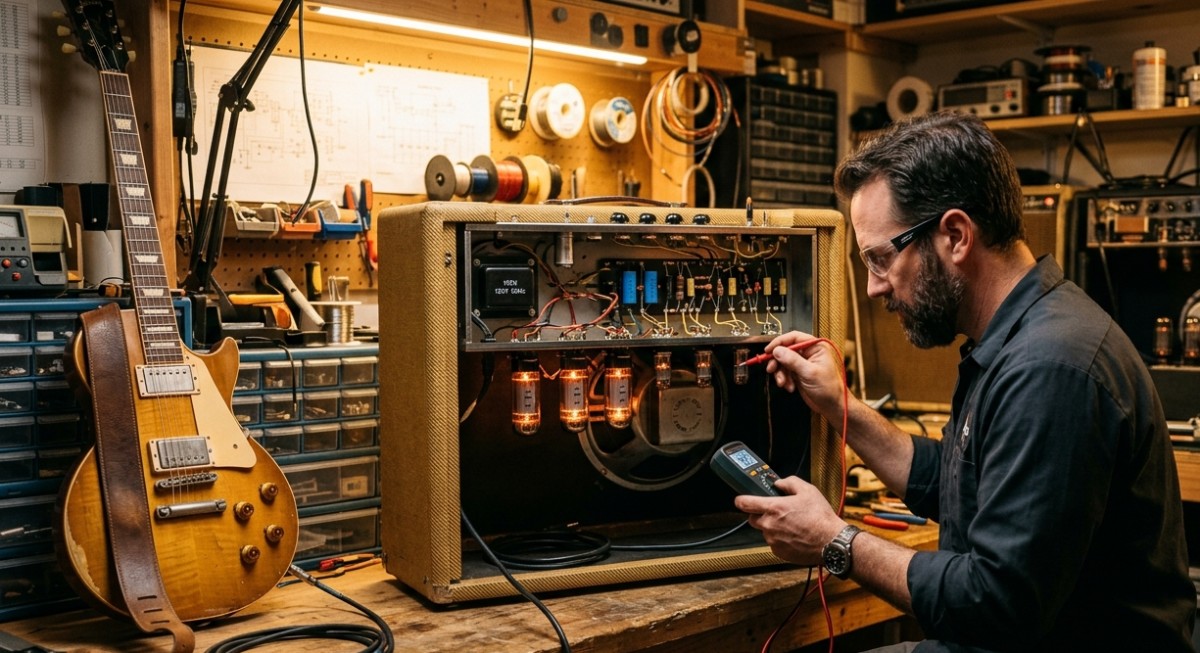
At Brocky’s Electronics, we’ve been helping Sunshine Coast musicians keep their gear stage-ready since 2006. Whether it’s a crackling pot, a failing tube, or a fault buried deep in the circuitry, our technicians properly diagnose the issue rather than guessing at replacement parts.
What working with our team looks like:
- Honest, transparent diagnostics before any work begins
- Experience with both valve and solid-state amplifiers across major brands
- A 12-month warranty on all completed repairs
- Fast turnaround so you’re not stuck without your gear for longer than necessary
For a full breakdown of our valve amp servicing, visit our dedicated guitar amplifier repair Sunshine Coast page. If your setup includes other gear like mixers, microphones, or PA equipment, our Audio Equipment Repair Sunshine Coast service covers that too.
We’ve also covered how proper amplifier servicing can genuinely transform your tone in our guide on how amplifier repair can improve your sound quality, which builds on a lot of what’s covered here.
You can see what local musicians have said about working with us on our Google Business Profile.
Final Thoughts
A crackling or cutting-out guitar amp is frustrating, but it’s rarely a mystery once you understand the usual causes. From dirty pots to ageing tubes, most issues have a clear, fixable explanation. If you’ve worked through the basic checks and the problem persists, professional guitar amplifier repair Sunshine Coast technicians can properly diagnose and resolve it, so you can get back to focusing on your playing instead of your gear.
Don’t let a faulty amp cut your next session short. Contact us today to book a diagnosis and get your sound back where it belongs.
FAQs
1. Why does my amp crackle only when I turn the volume knob?
This is usually caused by dirty or worn potentiometers. Contact cleaner can sometimes help temporarily, but a proper clean or replacement often provides a lasting fix.
2. Can a bad cable really cause amp crackling?
Yes, a damaged or worn instrument cable is one of the most common causes of intermittent crackling and should always be ruled out first.
3. Is it safe to open my amp and check it myself?
Externally checking cables and knobs is fine, but opening the chassis isn’t recommended due to stored high voltages, particularly in valve amps.
4. How often should valve amp tubes be replaced?
This varies by usage, but many technicians recommend inspection every 1,000 to 3,000 hours of use, with replacement as needed based on performance.
5. Can extreme temperature or humidity cause my amp to crackle?
Yes, temperature and humidity swings can affect internal components, especially valve amps, causing intermittent crackling or performance changes. Storing your amp in a stable, moderate environment can help reduce this over time.