
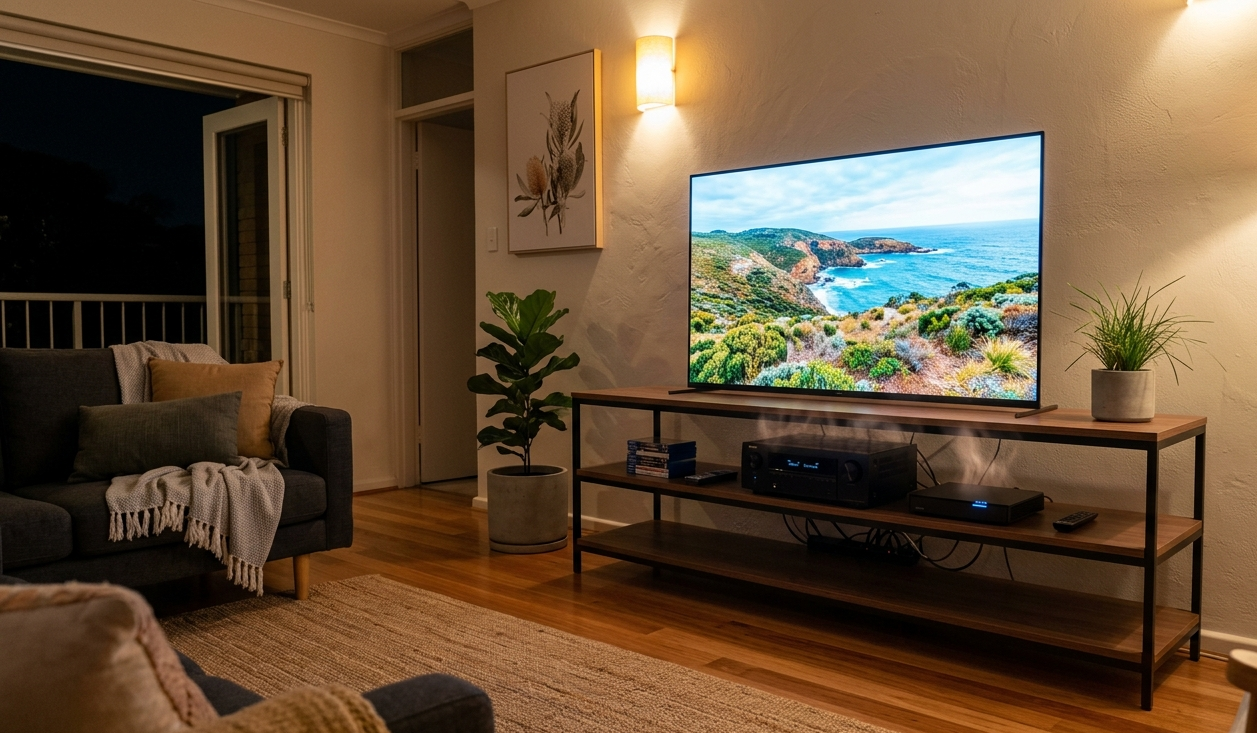
Overheating is one of the most common, and most preventable, causes of permanent damage in home electronics. Whether it’s your television shutting down mid-show, your amplifier running hot to the touch, or your gaming console throttling performance after an hour of play, heat is quietly working against your equipment every single day.
The problem is especially relevant on the Sunshine Coast, where warm summers and high humidity create conditions that push home electronics harder than they’re designed to handle. The good news is that most overheating issues are entirely preventable with a few simple habits and the right setup.
At Brocky’s Electronics, we repair heat-damaged televisions, amplifiers, mixing consoles, and audio equipment regularly. We know exactly what causes these faults and what Sunshine Coast households can do to prevent them. Here’s everything you need to know.
Why Overheating Is So Damaging to Home Electronics
Heat is the enemy of electronic components. Capacitors dry out, solder joints crack, thermal paste degrades, and circuit boards warp, all as a direct result of sustained high temperatures. What starts as occasional performance throttling or unexpected shutdowns can quickly progress to permanent component failure if the underlying cause isn’t addressed.
As explained on Wikipedia’s thermal management in electronics, every electronic component has a maximum operating temperature, and sustained exposure above that threshold permanently shortens its service life. In practical terms, that means the overheating home electronics sitting in your living room right now is accumulating damage with every hour it runs too hot.
The Most Common Causes of Overheating in Home Electronics
1. Blocked Ventilation and Poor Airflow
This is the leading cause of overheating in home electronics, and it’s almost entirely avoidable. Televisions, amplifiers, set-top boxes, and gaming consoles all rely on airflow through vents to dissipate heat. When those vents are blocked, heat has nowhere to go.
Common culprits:
- Placing equipment inside enclosed entertainment units or cabinets with no airflow
- Stacking devices directly on top of each other
- Pushing equipment flush against walls or other surfaces
- Covering vents with decorative items or cables
What to do:
- Ensure at least 10 to 15 centimetres of clearance around all sides of heat-generating equipment
- Use open-frame entertainment units rather than enclosed cabinets where possible
- Never stack amplifiers, set-top boxes, or consoles directly on top of each other
2. Dust and Debris Buildup Inside the Device
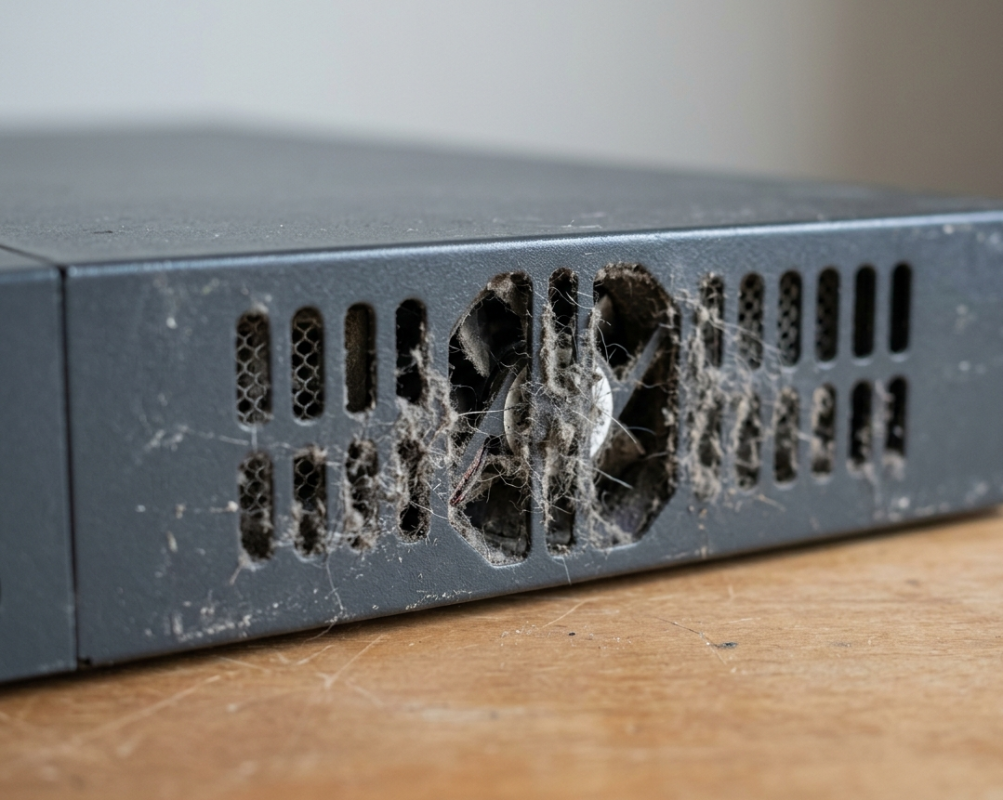
Dust accumulation inside home electronics is one of the most damaging and most overlooked maintenance issues. Dust acts as an insulating layer over heat-generating components, preventing them from dissipating heat effectively. It also clogs cooling fans, reducing airflow to critical areas.
What you’ll notice:
- Fans running louder or more frequently than usual
- The device running hotter than normal to the touch
- Unexpected shutdowns during extended use
- Performance throttling in computers and gaming consoles
What to do:
- Use compressed air to clean vents and fan intakes every 6 to 12 months
- Have older or heavily used equipment professionally cleaned internally
- Keep equipment off carpeted floors where dust is drawn up through vents
3. Inadequate Ventilation in the Room Itself
Even with perfectly clear vents, home electronics struggle in poorly ventilated rooms during Queensland summers. A room that retains heat, especially one without air conditioning or adequate airflow, raises the ambient temperature around your equipment and reduces its ability to cool itself effectively.
What to do:
- Use air conditioning or a fan in rooms where heat-generating equipment runs for extended periods
- Avoid placing equipment in direct sunlight or near windows that receive strong afternoon sun
- Consider the seasonal temperature range in Sunshine Coast homes when deciding where to position equipment permanently
4. Faulty or Degraded Cooling Components
Over time, the internal cooling components of home electronics degrade. Cooling fans wear out, thermal paste between processors and heatsinks dries up and loses conductivity, and heatsinks become clogged with compacted dust that can’t be cleared with compressed air alone.
Signs of degraded cooling:
- The device runs significantly hotter than it used to under the same conditions
- Fans make grinding, rattling, or intermittent noises
- Unexpected shutdowns that didn’t occur when the device was newer
- Performance throttling that worsens over time
Degraded thermal paste and worn cooling fans are straightforward repairs for a qualified technician, and addressing them early prevents far more expensive component failures down the track.
5. Power Supply Issues and Electrical Faults
A failing or undersized power supply generates excess heat as it works harder than it should to deliver stable voltage to the rest of the device. This is a common cause of overheating in older home electronics and in devices where a non-genuine power adapter has been substituted.
What to check:
- Always use the manufacturer-specified power adapter for your device
- If the power supply or adapter feels unusually hot to the touch, have it assessed
- Devices that shut down more frequently during warmer months may have a marginal power supply that’s no longer meeting the device’s thermal demands
6. Operating in an Unsuitable Environment
Sunshine Coast homes with high humidity, salt air in coastal areas, or significant temperature fluctuations between indoors and outdoors create environmental conditions that accelerate the degradation of electronic components. Moisture ingress in particular causes corrosion on circuit boards that compounds heat damage significantly.
For more detail on protecting your gear from environmental factors specific to the Sunshine Coast, our guide on home electronics overheating prevention covers the practical steps in full.
When to Stop Troubleshooting and Call a Professional
Some overheating causes are straightforward to address yourself. But these are clear signs your home electronics need professional attention:
- The device shuts down immediately or within minutes of being powered on
- Internal fans are making abnormal noises
- You can smell burning or notice discolouration near vents
- The device has been running hot for an extended period without resolution
- Performance has noticeably degraded over time alongside the heat issues
At Brocky’s Electronics, we repair heat-damaged televisions, amplifiers, digital pianos, valve amplifiers, and audio equipment across the Sunshine Coast. If your equipment also includes musical instruments or studio gear, our music equipment repair service covers everything from mixing consoles and studio monitors to electric pianos and valve amplifiers.
According to Choice Australia’s electronics care guide, proper ventilation and regular maintenance are the two most effective steps Australian households can take to extend the life of their electronic devices, and both are entirely within the control of the homeowner.
Why Sunshine Coast Locals Trust Brocky’s Electronics
We’re a local workshop, not a mail-away repair centre. When you bring your home electronics to us, a qualified technician with real hands-on experience assesses the device, explains what caused the fault, and talks you through the repair options before any work begins.
Here’s what you get with every service at Brocky’s Electronics:
- Experienced technicians across all major brands and device types
- Honest assessment, we’ll tell you if prevention is all that’s needed
- Fast turnaround, because we know you need your equipment working
- Genuine replacement parts wherever possible
- Transparent, upfront pricing with no surprises
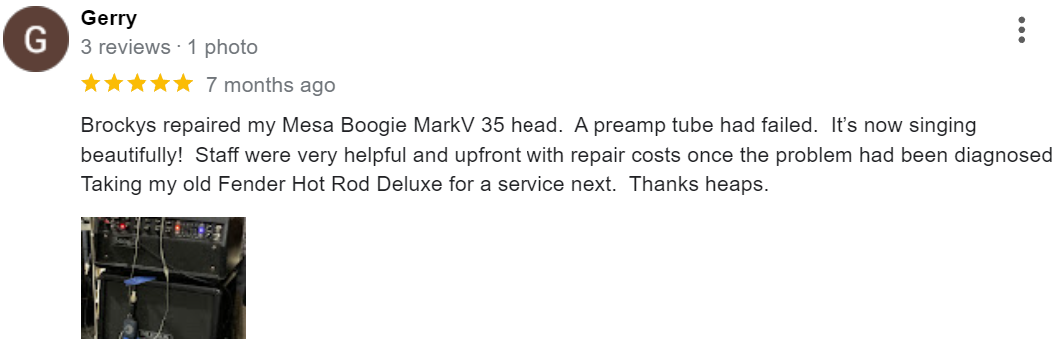
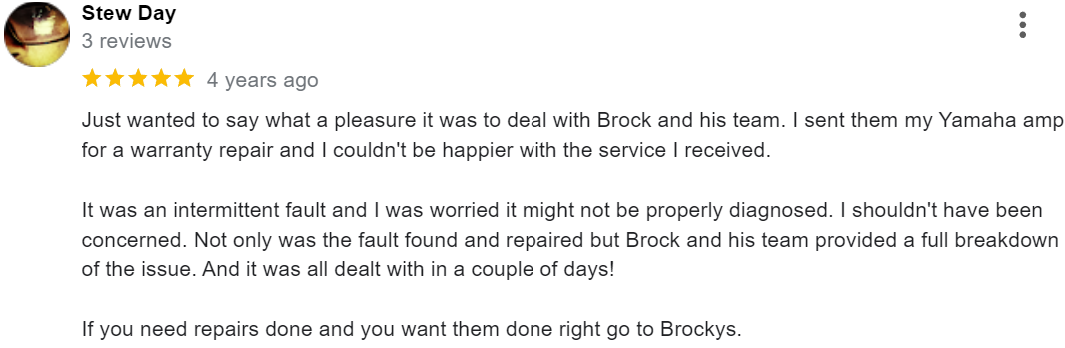
We’ll let the locals we’ve helped do the talking.
Book Your Electronics Assessment Today
Don’t wait until overheating causes permanent damage to your home electronics. Whether it’s a professional internal clean, a cooling component replacement, or a full repair, the team at Brocky’s Electronics is ready to help.
From overheating repairs to televisions, audio equipment, and music gear, you can find everything we do at Brocky’s Electronics. Contact Brocky’s Electronics today and we’ll have your equipment assessed and running safely as soon as possible.
FAQs
1. How do I know if my home electronics are overheating?
Common signs include unexpected shutdowns, fans running louder than usual, the device running hot to the touch, and performance throttling during extended use. Any of these warrants investigation before permanent damage occurs.
2. How often should I clean the vents on my home electronics?
Every 6 to 12 months is a good general rule, more frequently in homes with pets, carpet, or dusty environments. A quick clean with compressed air takes minutes and can significantly extend the life of your equipment.
3. Can overheating permanently damage my electronics?
Yes. Sustained high temperatures degrade capacitors, crack solder joints, and warp circuit boards. Damage caused by chronic overheating is often irreversible without component-level repair.
4. Is it safe to leave home electronics in enclosed cabinets?
Only if the cabinet has adequate ventilation built in. Enclosed entertainment units without proper airflow are one of the most common causes of overheating we see on the Sunshine Coast.
5. Does Brocky’s Electronics repair heat-damaged devices on the Sunshine Coast?
Yes. We repair heat-damaged televisions, amplifiers, digital pianos, mixing consoles, and audio equipment across the Sunshine Coast, with honest assessments and transparent pricing before any work begins.