
Overheating is one of the most common causes of device failure. From televisions and digital pianos to amplifiers and everyday entertainment systems, excess heat slowly damages internal components and affects performance. This guide explains the main causes of electronics overheating, including poor airflow, dust buildup, power issues, and prolonged usage. It also outlines practical steps homeowners can take to prevent overheating in home devices before permanent damage occurs. By understanding how heat develops within electronics and following simple care practices, users can reduce breakdown risk, extend device lifespan, and avoid costly repairs.
Why Home Electronics Overheating Is a Serious Problem
Modern electronics are built to operate within specific temperature ranges. When those limits are exceeded, internal parts such as circuit boards, capacitors, and processors begin to degrade. Home electronics often overheat quietly, showing signs such as unexpected shutdowns, distorted audio, screen flickering, or sluggish response times.
Left unaddressed, heat damage can shorten a device’s lifespan by years. In severe cases, overheating can also pose safety risks, including melted wiring or electrical failure.
Common Causes of Electronics Overheating in Homes
1. Poor Ventilation and Airflow
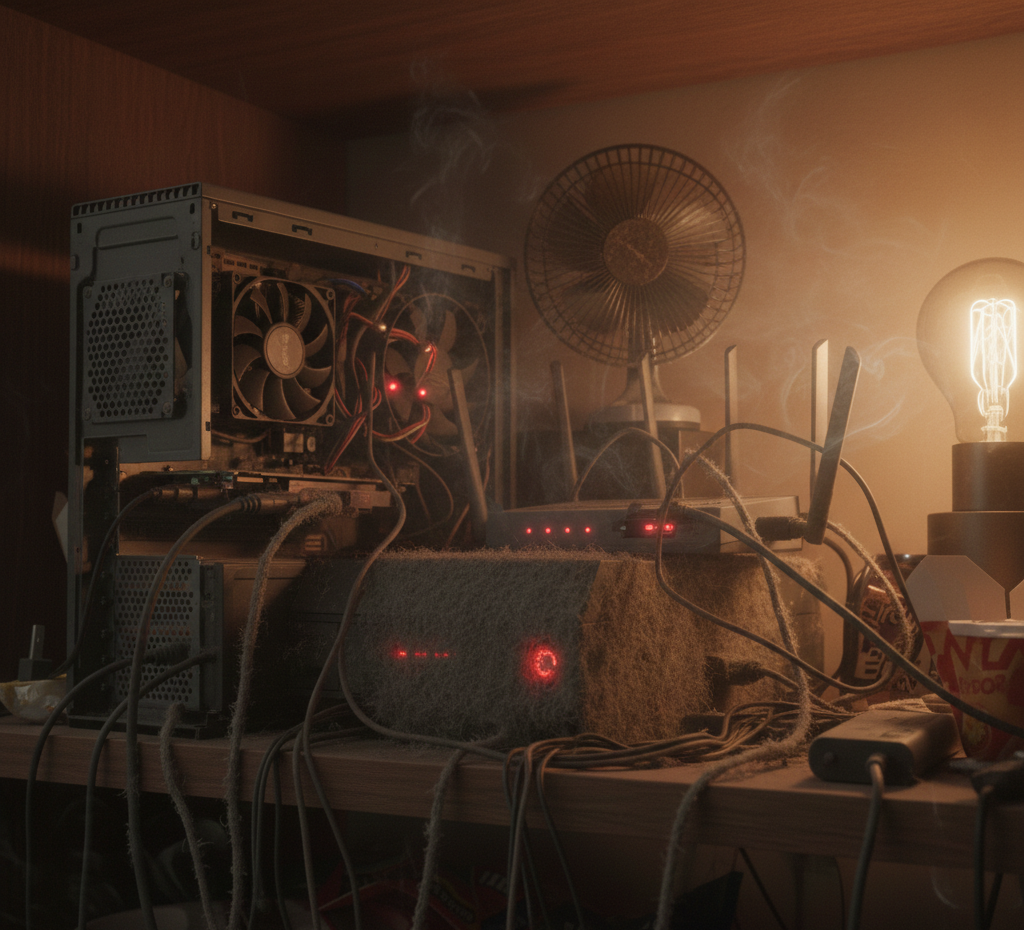
One of the leading causes of electronics overheating is blocked airflow. Many home devices rely on vents or internal fans to release heat. When electronics are placed inside cabinets, pushed against walls, or stacked closely together, heat becomes trapped.
Televisions mounted without spacing, amplifiers stored in enclosed shelves, and gaming systems placed on carpet are common examples of airflow restriction that leads to heat problems.
2. Dust and Debris Accumulation
Dust acts as insulation. Over time, it accumulates inside vents, fans, and circuit boards, trapping heat and forcing components to operate at higher temperatures. Dust buildup is a major contributor to thermal issues in electronic devices, especially in homes with pets or high foot traffic.
According to itsupplychain.com, blocked vents and dust buildup are common reasons electronics fail prematurely due to overheating
3. Extended or Continuous Usage
Devices that run for long hours without rest naturally generate more heat. Televisions used all day, valve amplifiers left powered on, and digital pianos used for extended sessions can overheat if cooling systems are overwhelmed.
Continuous use without power interruptions is a common cause of electronics overheating in entertainment and music equipment.
4. Power Supply and Voltage Issues
An unstable power supply, faulty adapters, or incorrect voltage can cause devices to draw excess current, generating excess heat. Cheap power boards and damaged cords increase the risk of overheating in home devices.
The blog.se.com explains how power quality issues increase stress on electronic systems and internal components.
5. Aging Internal Components
As electronics age, internal parts lose efficiency. Capacitors dry out, solder joints weaken, and cooling fans slow down. Older televisions, amplifiers, and keyboards are more likely to experience heat problems even under normal use.
Aging components are a hidden but common cause of electronics overheating, often requiring professional inspection.
6. Environmental Heat and Placement
Room temperature plays a major role in device performance. Electronics placed near windows, heaters, or in poorly ventilated rooms are exposed to higher ambient temperatures. Summer heat combined with device operation significantly increases the risk of overheating.
Warning Signs of Overheating in Home Electronics
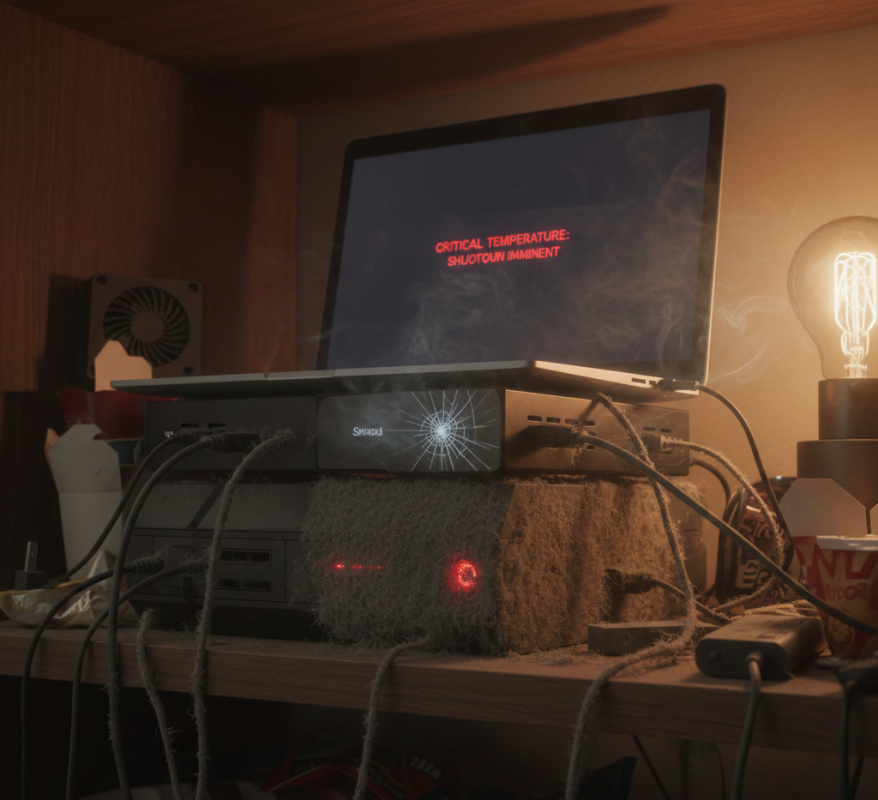
Knowing the early signs helps prevent permanent damage:
- Sudden shutdowns or restarts
- Hot surfaces or burning smells
- Distorted audio or visual output
- Reduced performance or lag
- Fan noise is becoming louder or constant
If these symptoms appear, immediate action can prevent further damage.
How to Prevent Device Overheating at Home
Improve Airflow Around Devices
Allow space around vents and avoid placing electronics in enclosed cabinets. Wall-mounted TVs should have clearance behind them, and amplifiers should never be stacked without ventilation gaps.
Clean Electronics Regularly
Use compressed air or soft brushes to remove dust from vents and fans every few months. Avoid liquid cleaners near electrical components.
Regular cleaning is one of the most effective methods for cooling electronics and maintaining long-term reliability.
Use Proper Power Protection
Surge protectors and high-quality power boards help regulate electrical current and reduce stress on internal components. Replace damaged cables immediately.
Avoid Continuous Operation
Power down devices when not in use. Allow electronics to cool between long sessions, especially for music equipment and entertainment systems.
Keep Devices Away from Heat Sources
Avoid placing electronics near heaters, direct sunlight, or tightly enclosed areas. Maintaining stable room temperatures significantly reduces heat-related issues in electronic devices.
When Professional Help Is Needed
Some overheating issues cannot be resolved with basic care. Internal fan failure, degraded components, or power circuit faults require technical repair. Attempting internal fixes without training can cause further damage or safety hazards.
If overheating persists despite preventive steps, professional inspection is the safest option.
Helpful Internal Resources
For specialised servicing related to overheating-affected equipment, professional Music Equipment Repair services can help restore performance and address internal heat damage.
If your television is experiencing heat-related issues, expert Sony TV Repair support can identify internal faults caused by overheating.
Final Thoughts and Professional Support
Home electronics overheating is rarely caused by a single issue. It usually develops from a combination of airflow issues, dust buildup, power stress, and aging components. Taking preventive steps early reduces breakdown risks and protects your investment.
For reliable assessment and repair of heat-damaged devices, Brocky’s Electronics provides expert servicing for televisions, music equipment, valve amplifiers, and digital pianos. If your electronics show signs of overheating or repeated shutdowns, reach out today through the official website and use the Contact Us to book professional assistance.
FAQs
1. What causes home electronics to overheat most often?
Blocked airflow and dust buildup are the most common causes of electronics overheating in homes.
2. Can overheating permanently damage electronics?
Yes. Prolonged heat exposure degrades internal components and shortens device lifespan.
3. How often should electronics be cleaned to prevent overheating?
Basic dust cleaning every 3–6 months helps prevent electronic device heat problems.
4. Is it safe to keep electronics running all day?
Continuous usage increases heat buildup and should be avoided where possible.
5. When should I seek professional repair for overheating?
If devices shut down, smell hot, or continue overheating after basic care, professional repair is recommended.