
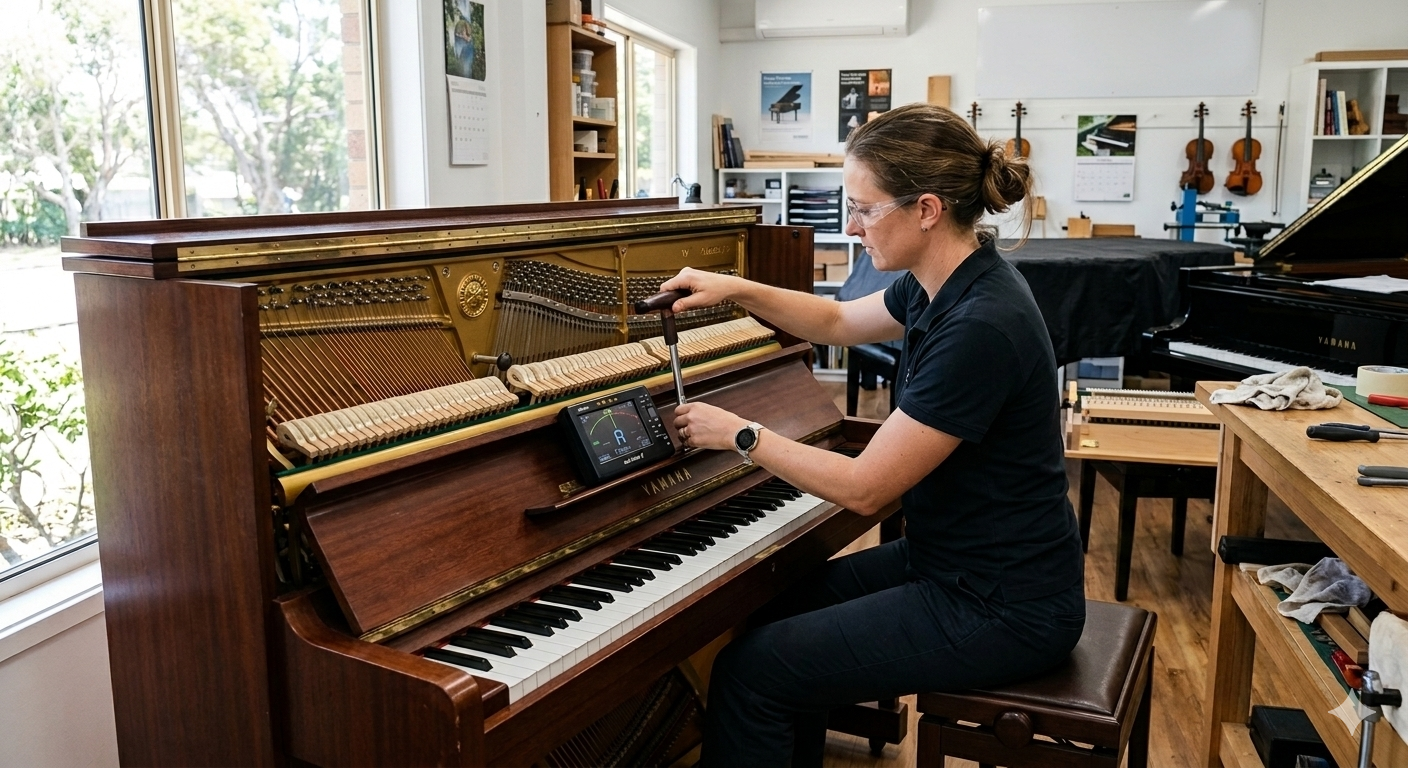
Every piano develops issues over time. Whether you own a classic acoustic upright, a grand piano, or a modern digital instrument, common piano problems have a habit of appearing at the worst possible moments, mid-practice, before a performance, or after a piano that’s been sitting unused for months is finally played again.
The good news is that not every piano problem requires an immediate call to a technician. Some faults are straightforward to identify and address at home. Others are signs of deeper issues that get significantly more expensive the longer they’re left. At Brocky’s Electronics, we carry out piano repair across the Sunshine Coast regularly, and we see the same problems come through our workshop time and again. Here’s an honest breakdown of what’s causing them and what to do about each one.
The Most Common Piano Problems We See on the Sunshine Coast
1. Sticky or Sluggish Keys
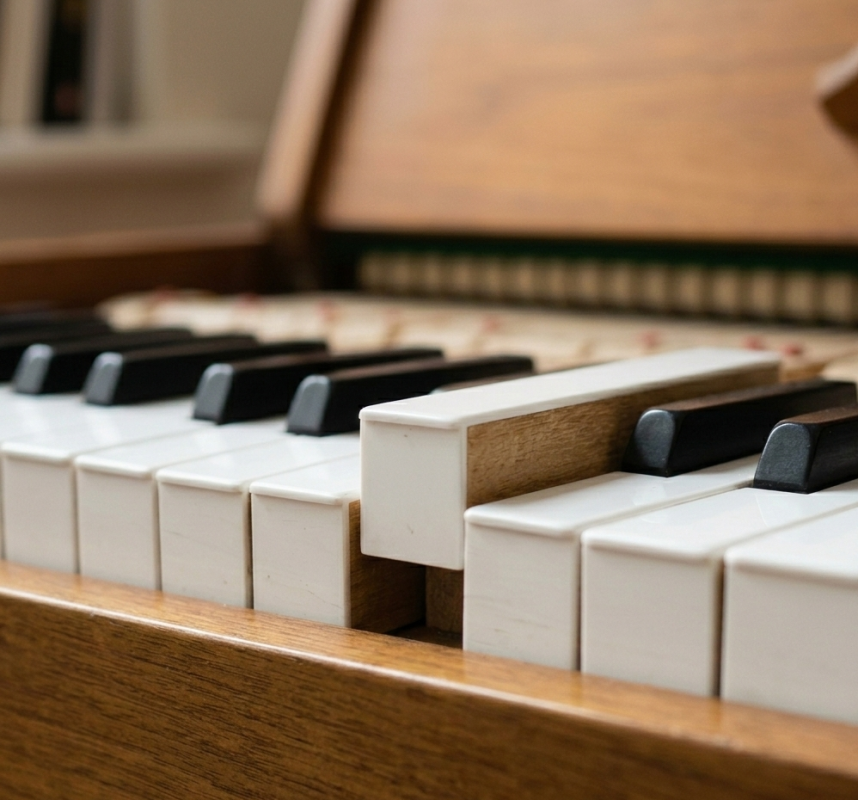
Sticky keys are one of the most frequently reported common piano problems for both acoustic and digital piano owners. A key that doesn’t return to its resting position quickly, or that requires more effort than others to press, disrupts playing and often gets worse over time.
In acoustic pianos, the most common causes are:
- Swollen key bushings caused by humidity, particularly relevant in the Sunshine Coast’s coastal environment
- Objects wedged between or beneath keys
- Worn or deteriorated key felt causing friction
- Warped wooden key components from prolonged moisture exposure
In digital pianos, sticky keys are usually caused by:
- Debris or dust beneath the key mechanism
- Worn key return springs or deteriorated key bed rubber
- Physical impact damage to the key housing
What to try:
- Carefully remove the key covering and check for visible debris or foreign objects beneath the keys
- In acoustic pianos, check whether the problem worsens in humid conditions, which points to swollen bushings
- Do not attempt to force sticky keys, as this risks snapping the key shank or damaging the action
If the problem affects multiple keys or worsens seasonally, a professional piano repair assessment is needed.
2. Keys That Produce No Sound
A key that feels normal when pressed but produces no sound is one of the more alarming common piano problems, though the cause is often more straightforward than it appears.
In acoustic pianos:
- A broken or detached hammer shank prevents the hammer from striking the string
- A stuck damper is preventing the string from vibrating freely
- A broken string, which produces silence or a dead thud rather than a clear note
In digital pianos:
- A failed key sensor or contact strip beneath the key
- A disconnected internal ribbon cable
- A firmware or software fault affecting individual key zones
What to try:
- In a digital piano, perform a factory reset and firmware update to rule out a software cause
- Check whether the silent key corresponds to a visible string break on an acoustic instrument
- Test whether the key responds in headphone mode on a digital piano, which isolates the sensor from the speaker system
If the fault is a broken hammer, string, or internal sensor, professional piano repair is needed.
3. Uneven Key Response or Inconsistent Touch
When some keys feel noticeably heavier or lighter than others, or when the dynamic response across the keyboard is uneven, it significantly affects playability and intonation.
Common causes in acoustic pianos:
- Uneven hammer felt voicing causing tonal inconsistency between notes
- Worn key lead weights affecting key balance
- Action regulation that has drifted out of spec over time
Common causes in digital pianos:
- Worn key bed rubber or hammer mechanism components causing inconsistent weight
- Individual key sensors with reduced sensitivity
Action regulation, where a qualified technician adjusts all the mechanical tolerances within the piano action to a consistent specification, is the standard solution for acoustic instruments. For digital pianos, worn internal components need assessment and replacement.
4. Buzzing, Rattling, or Unwanted Noise
Unusual noises from a piano that aren’t part of the note itself are among the most distracting common piano problems for players and listeners alike.
Common sources in acoustic pianos:
- Loose cabinet panels or music desk rattling sympathetically with certain frequencies
- A broken string vibrating against adjacent strings
- Objects resting on or inside the piano resonating during playing
- Worn damper felt allowing string vibration to continue unevenly
Common sources in digital pianos:
- Loose speaker grille or cabinet panel
- A failing internal speaker
- Electrical buzzing from a power supply issue
What to try:
- Check and tighten any loose screws on the cabinet, lid, or music desk
- Remove any objects from the top of the piano that may be resonating
- Test a digital piano through headphones to determine whether the noise is from the speakers or the internal audio processing
If the buzzing persists through headphones on a digital piano, the fault is internal and needs professional diagnosis.
5. Sustain Pedal Not Working Correctly
Pedal faults are among the most common piano problems for both acoustic and digital instruments, and they’re often misdiagnosed as a piano fault when the issue is actually in the pedal mechanism or connection.
In digital pianos:
- Reversed polarity, where the sustain pedal holds notes when released and cuts them off when pressed, is almost always caused by the pedal being connected or switched on in the wrong order at startup
- A faulty pedal cable or damaged jack socket
- A failed triple pedal unit connector
In acoustic pianos:
- Worn or broken pedal mechanism linkages
- A pedal that’s physically loose at the lyre assembly
- Damper lift felt that’s deteriorated and no longer functions consistently
What to try on a digital piano:
- Power off the instrument completely, unplug the pedal, then power back on before reconnecting
- Try a replacement sustain pedal to isolate whether the fault is in the pedal or the piano
As covered in how piano pedal mechanisms function across different instrument types, the sustain, sostenuto, and soft pedal functions each involve distinct mechanical or electronic pathways, meaning faults in different pedals often point to different components entirely.
6. Piano Going Out of Tune Quickly
An acoustic piano that loses its tuning faster than expected between visits from a piano tuner is telling you something about its environment or internal condition.
Common causes:
- High humidity fluctuations in the Sunshine Coast’s coastal climate causing the soundboard to expand and contract
- A deteriorating pin block that can no longer hold string tension reliably
- Strings that are still settling after a pitch raise or major tension change
What to do:
- Maintain the piano in a climate-controlled room where temperature and humidity are relatively stable
- Have the tuning stability discussed with your technician at the next service visit
- A piano that won’t hold tuning despite good environmental conditions may need pin block assessment
For a detailed look at whether piano repair is cost-effective on older instruments that are developing multiple issues, repair older digital piano worth it covers the key factors to consider before making a decision.
When Common Piano Problems Need Professional Attention
Some of these checks are safe and worth trying at home. But these are clear signs professional piano repair is needed:
- Multiple keys are silent, sticky, or unresponsive after basic checks
- A buzzing or rattling noise persists through headphones on a digital piano
- The piano has been dropped, moved roughly, or exposed to liquid
- An acoustic piano is losing tuning rapidly despite a stable environment
- Any fault has been present and worsening for more than a few weeks
For professional assessment and repair of digital instruments, digital piano repair on the Sunshine Coast covers everything from key sensor replacements and pedal faults to internal circuit repairs across all major brands.
If your household also has valve amplifiers or audio equipment that need attention alongside your piano, valve amplifier repair on the Sunshine Coast is handled by the same experienced local team.
Why Sunshine Coast Musicians Trust Brocky’s Electronics
We’re a local workshop, not a mail-away repair centre. When you bring your piano to us, a qualified technician with real hands-on experience across digital and acoustic instrument repair assesses it honestly and talks you through every option before any work begins.
Here’s what you get with every piano repair at Brocky’s Electronics:
- Experienced technicians across all major digital piano brands including Yamaha, Roland, Kawai, and Casio
- Honest assessment, we’ll tell you if repair isn’t the right call
- Fast turnaround, because we know you can’t be without your instrument
- Genuine replacement parts wherever possible
- Transparent, upfront pricing with no surprises
We’ll let the locals we’ve helped do the talking.
Get Your Piano Sorted Today
Don’t let common piano problems sit until they become something far more expensive to fix. Whether it’s a sticky key, a silent note, or a pedal that’s stopped working, the team at Brocky’s Electronics is ready to help.
From common piano problems and repairs to valve amplifiers, televisions, and audio equipment, you can find everything we do at Brocky’s Electronics.
Contact Brocky’s Electronics today and we’ll have your piano assessed and back in playing condition as soon as possible.
FAQs
1. Why are some of my piano keys sticky?
Sticky keys in acoustic pianos are usually caused by swollen key bushings from humidity, particularly common in coastal Sunshine Coast homes. In digital pianos, debris or worn key return components are the most frequent cause.
2. Why does one of my piano keys make no sound?
In acoustic pianos, a broken hammer shank or string is the most likely cause. In digital pianos, a failed key sensor or disconnected ribbon cable is usually responsible.
3. Why does my piano go out of tune so quickly?
Rapid tuning loss in acoustic pianos is usually caused by humidity fluctuations, a deteriorating pin block, or strings still settling after a pitch raise. A stable indoor environment significantly improves tuning stability.
4. Can I fix a buzzing sound on my piano myself?
Check for loose cabinet panels and objects on the piano first. If the buzzing persists through headphones on a digital piano, the fault is internal and needs professional diagnosis.
5. Is piano repair worth it on an older instrument?
In most cases, yes, particularly for quality brands. The decision depends on the extent of the fault, the instrument’s age, and its replacement cost. A professional assessment gives you a clear answer before any money is spent.