

Your piano isn’t just an instrument it’s largely made of wood, and wood has a habit of quietly reacting to everything happening around it. Long before you notice a change in sound, humidity may already be working against your piano, swelling keys, loosening tuning pins, and stressing the very components that make it sing.
For Sunshine Coast owners, this is more than a passing concern. Our coastal climate swings between sticky, humid months and drier stretches, and pianos feel every bit of that shift. That’s why so many local musicians eventually turn to a trusted Piano repair Sunshine Coast technician not necessarily because something broke overnight, but because humidity had been working against their instrument for months without them realising it. Whether you own a treasured acoustic upright or rely on digital piano repair for a more modern setup, understanding how humidity affects your instrument is the first step toward protecting it.
Why Wood and Therefore Your Piano Reacts to Humidity
Wood is what’s known as a hygroscopic material, meaning it constantly absorbs and releases moisture depending on the surrounding air. This isn’t a flaw in piano design; it’s simply the nature of the relative humidity around it interacting with organic materials. As humidity rises, wood absorbs moisture and swells slightly. As it drops, wood releases moisture and contracts.
Inside a piano, this constant micro-movement affects:
- The soundboard, which can swell or crack depending on moisture levels
- Tuning pins, which may loosen in overly dry conditions, causing pitch instability
- Keys and action parts, which can stick or feel sluggish when moisture builds up
- Glued joints, which may weaken over time as wood repeatedly expands and contracts
None of this happens overnight. It’s a slow, cumulative process which is exactly why so many owners are caught off guard when their piano suddenly “feels off.”
The Warning Signs You Might Be Missing
Because humidity damage builds gradually, the early signs are often mistaken for normal wear. Keep an eye out for:
- Keys that feel sticky, heavy, or slow to return to position
- Notes that drift out of tune faster than usual between services
- A dull, muffled, or inconsistent tone across different sections of the keyboard
- Visible warping, small gaps, or hairline cracks near the soundboard
- Increased resistance or stiffness in the pedals
If several of these sound familiar, it’s worth booking a proper assessment rather than waiting for the problem to become more obvious and more expensive.
Sunshine Coast’s Climate Makes This Especially Relevant
Coastal humidity doesn’t behave like inland weather. Ocean proximity means moisture levels can shift noticeably between seasons, and even week to week during certain times of year. Homes without climate control, or those near open windows and coastal breezes, often experience these swings more intensely indoors than owners realise.
This is one of the main reasons local, experienced Piano repair on the Sunshine Coast professionals recommend more frequent check-ins for instruments here compared to drier, inland regions. It’s not about your piano being lower quality it’s simply responding to its environment, exactly as wood naturally does.Industry bodies like the Piano Technicians Guild also recognise humidity control as one of the most important factors in long-term piano care, which is why proper climate management is considered standard practice among trained technicians.
What About Digital Pianos?
It’s a common misconception that digital pianos are immune to humidity issues since they lack traditional wooden soundboards and strings. In reality, digital piano repair needs are often just as real, though the causes differ.
Humidity and moisture can still affect:
- Internal electronic components, particularly in older or lower-quality units
- Wooden cabinets and key beds, which many digital pianos still use
- Key sensors, which can become less responsive in consistently damp conditions
- Connectors and circuit boards, which are vulnerable to corrosion over time in humid environments
If you’re noticing unresponsive keys, inconsistent sound, or electrical quirks on a digital instrument, it’s worth having it properly assessed rather than assuming it’s simply ageing.
Practical Ways to Protect Your Piano
You can’t control the weather, but you can reduce how much it affects your instrument:
- Keep your piano away from exterior walls, windows, and direct airflow from air conditioning or heating vents
- Use a dehumidifier or humidifier as needed to maintain more consistent indoor humidity levels
- Avoid placing your piano near the kitchen, bathroom, or laundry, where moisture levels fluctuate more
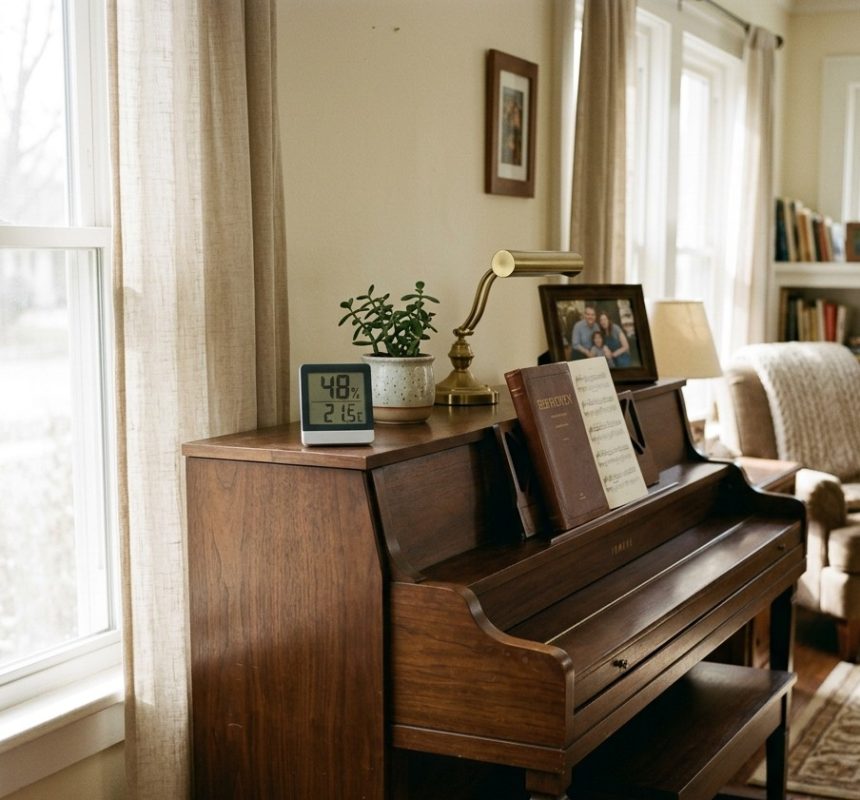
- Monitor humidity with a simple hygrometer, so you can catch problematic swings early
- Schedule regular professional check-ups, rather than waiting until a problem becomes obvious
How Brocky’s Electronics Can Help
At Brocky’s Electronics, we understand just how much Sunshine Coast’s climate affects local instruments, because we see it firsthand in the pianos we service across the region. Our technicians don’t just fix the immediate issue we look at what’s causing it, so you’re not back in the same position a few months later.
Whether you’re dealing with sticky, heavy keys or a piano that’s drifted noticeably out of tune, our Piano keys sticking and heavy causes guide breaks down exactly what might be happening beneath the surface.
Our services extend beyond pianos too if you’ve got other instruments or audio gear affected by similar wear and tear, our Music Equipment Repair service covers a wide range of repairs for musicians across the Sunshine Coast.
You can also see what local musicians and piano owners have said about working with us on our Google Business Profile.
Final Thoughts
Humidity damage is one of the sneakiest threats to a piano’s long-term health, precisely because it happens gradually and often goes unnoticed until the sound or feel of the instrument has already changed. Whether you’re noticing sticky keys, tuning instability, or you’re simply unsure how your instrument is holding up in our coastal climate, a proper assessment from an experienced Piano repair Sunshine Coast technician can catch problems early and protect your investment for years to come.
Don’t wait until the damage becomes obvious. Contact us today to book an assessment and keep your piano sounding exactly as it should.
FAQs
1. How do I know if humidity is affecting my piano?
Common signs include sticky keys, faster-than-usual tuning drift, muffled tone, or visible warping near the soundboard.
2. What’s the ideal humidity level for a piano?
Most technicians recommend keeping indoor humidity between roughly 40-50%, avoiding sudden swings in either direction.
3.Can digital pianos really be affected by humidity?
Yes, though differently to acoustic pianos. Wooden cabinets, key sensors, and internal electronics can all be impacted by consistently damp conditions.
4. How often should I get my piano checked on the Sunshine Coast?
Given the region’s humidity swings, more frequent check-ins than in drier climates are generally recommended, alongside regular tuning.
5. Can humidity damage happen even if my piano isn’t near a window?
Yes. Indoor humidity affects the entire room, not just areas near windows or doors. Even a piano placed against an interior wall can be affected if the overall room humidity fluctuates significantly.