
If your piano keys feel sluggish, stick in the down position, or require noticeably more effort to press than they used to, something has changed inside your instrument. It might be gradual, a key that’s been a little slow to return for months. Or it might be sudden, a key that simply stopped coming back up after a practice session. Either way, sticking or heavy piano keys are one of the most common issues piano owners bring to us on the Sunshine Coast, and the cause is rarely a mystery once you know what to look for.
At Brocky’s Electronics, we carry out piano repair across the Sunshine Coast on both acoustic and digital instruments. Here’s what’s actually causing your keys to stick or feel heavy, and what to do about each one.
Why Piano Keys Stick or Feel Heavy
The cause of sticking or heavy piano keys depends significantly on whether you own an acoustic or digital instrument. The mechanics are completely different, and diagnosing the fault correctly determines whether it’s something you can address at home or whether professional piano repair is needed.
Sticking Piano Keys in Acoustic Pianos
1. Swollen Key Bushings From Humidity
This is the most common cause of sticking piano keys in acoustic instruments on the Sunshine Coast, and the coastal climate is a significant contributing factor. Piano keys are guided by two felt-lined holes called key bushings one at the front of the key over the balance rail pin, and one at the back over the guide rail pin.
When humidity rises, these felt bushings absorb moisture and swell, gripping the pins tighter than they should. The key goes down normally but doesn’t return freely.
Signs this is your issue:
- Keys stick more during humid weather or after a wet coastal summer
- The problem affects multiple keys rather than just one isolated key
- Sticking improves when the weather is drier or when the room is air conditioned
What to do:
- Maintain the piano in a climate-controlled room with stable humidity where possible
- A dehumidifier in the room during humid periods reduces the impact significantly
- If the swelling is severe, a technician can ream the key bushings to restore the correct fit
Do not apply lubricant to sticking key bushings. This is one of the most common DIY mistakes and attracts dirt that makes the problem worse over time.
2. Foreign Objects Beneath the Keys
An object that has fallen between or beneath the keys is a straightforward but easily overlooked cause of sticking or blocked piano keys. Pens, coins, small toys, and accumulated debris are common culprits, particularly in instruments played by younger students.
What to do:
- Remove the key cover and visually inspect beneath the keys with a torch
- Carefully use a thin tool to retrieve any visible objects without forcing the key mechanism
- If the obstruction isn’t immediately visible or accessible, have a technician remove the keys for a thorough inspection
3. Worn or Deteriorated Key Felt
Over time, the felt components inside an acoustic piano’s action wear down, compress, and in some cases deteriorate to the point where they no longer allow piano keys to move freely. This includes the key bushings, the balance rail punchings, and the front rail punchings that regulate key height and travel.
Signs of felt deterioration:
- Keys feel inconsistently weighted across the keyboard
- The action feels generally sluggish rather than having specific stuck keys
- The piano is older and hasn’t been serviced in many years
Felt replacement and key regulation is a professional piano repair job that restores consistent action feel across the entire keyboard.
4. Warped or Swollen Wooden Components
Solid wooden components inside an acoustic piano’s action, including key shanks, wippen flanges, and hammer shanks, can warp or swell in response to sustained humidity exposure. This is more common in older instruments and in coastal Sunshine Coast homes with significant humidity fluctuation.
What you’ll notice:
- Keys that feel stiff to press rather than sticky in return
- Mechanical binding in the action that doesn’t correspond to a specific object or felt fault
- Inconsistent behaviour that changes with the seasons
Warped action components need professional assessment and in many cases replacement during a full action regulation service.
Sticking or Heavy Piano Keys in Digital Pianos
1. Debris Beneath the Key Mechanism
Digital piano keys use a hammer or spring mechanism beneath each key that can be affected by dust, debris, and foreign objects in the same way acoustic keys can.
What to do:
- Use compressed air to carefully clear debris from around the key edges
- If a specific key is stuck due to a visible obstruction, gently remove it without forcing the key downward
- Do not attempt to remove digital piano keys without referring to your instrument’s service manual, as many digital piano key mechanisms are fragile and easily damaged
2. Worn Key Return Springs or Rubber Components
Digital piano keys return to their resting position using rubber components or springs that degrade over time, particularly in instruments that are played regularly over many years.
Signs of worn return components:
- Specific keys that return slowly or not at all
- Keys that feel noticeably lighter than those around them
- Return issues that don’t respond to cleaning or debris removal
Worn key return components need replacement during a professional digital piano repair on the Sunshine Coast, as accessing the internal key mechanism without the right tools and experience risks damaging the key bed and surrounding circuitry.
3. Physical Impact Damage to the Key Housing
A key that has been struck, dropped on, or physically impacted can crack or deform the key housing, causing it to bind against adjacent keys or the key bed itself.
What to look for:
- Visible cracks or deformation on the key surface or sides
- A key that sits visibly lower or higher than its neighbours at rest
- Binding that’s specific to one key rather than a group
Physical damage to digital piano keys typically requires key replacement rather than repair. Genuine replacement keys are available for most major brands and are fitted during a professional service visit.
When to Stop and Book a Professional Piano Repair
Some causes of sticking or heavy piano keys are straightforward to address at home. These are clear signs professional piano repair is needed:
- Multiple keys are affected and humidity control hasn’t helped
- The sticking worsens progressively despite basic checks
- Felt components are visibly deteriorated or the action feels generally inconsistent
- A digital piano key has been physically damaged
- Removing the key cover reveals no obvious cause
If your digital piano has additional faults alongside the key issues, such as pedal problems that developed around the same time, digital piano pedal not working fixes covers the most common pedal fault causes and diagnostic steps.
If your setup also includes other music equipment that needs attention, music equipment repair on the Sunshine Coast covers mixing consoles, amplifiers, studio monitors, and more.
As covered in how piano action mechanics determine touch and response, the mechanical tolerances within a piano action are precise, and even minor changes to felt thickness, key bushing fit, or component alignment produce noticeable changes in how the piano keys feel and respond.
Why Sunshine Coast Musicians Trust Brocky’s Electronics
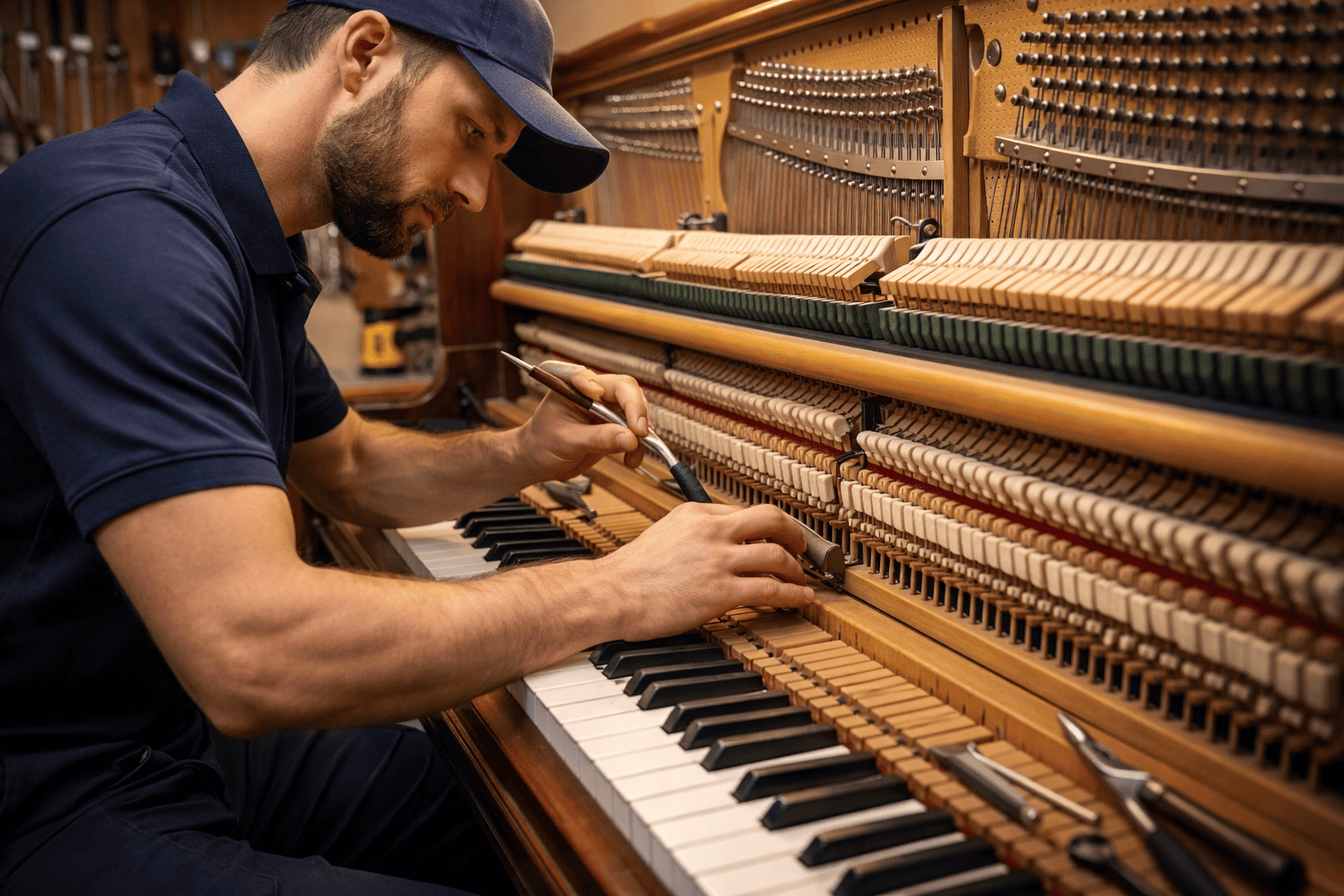
We’re a local workshop, not a mail-away repair centre. When you bring your instrument to us, a qualified technician with real hands-on experience across acoustic and digital piano repair assesses the fault honestly and explains every option before any work begins.
Here’s what you get with every piano repair at Brocky’s Electronics:
- Experienced technicians across all major digital piano brands including Yamaha, Roland, Kawai, and Casio
- Honest assessment, we’ll tell you if a simple fix is all that’s needed
- Fast turnaround, because we know you can’t be without your instrument
- Genuine replacement parts wherever possible
- Transparent, upfront pricing with no surprises
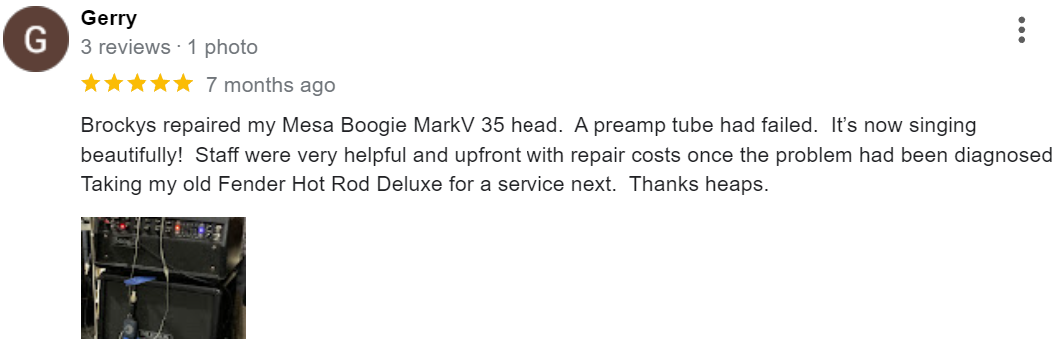
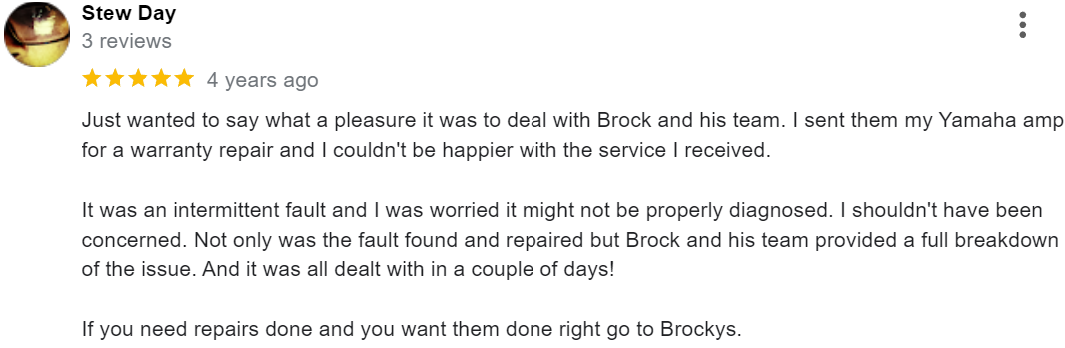
We’ll let the locals we’ve helped do the talking.
Get Your Piano Keys Sorted Today
Don’t let sticking or heavy piano keys disrupt your playing. Whether it’s a humidity issue, a debris clearance, or a full action repair, the team at Brocky’s Electronics is ready to help.
From piano keys repairs to digital piano servicing, music equipment repair, and more, you can find everything we do at Brocky’s Electronics.
Contact Brocky’s Electronics today and we’ll have your piano assessed and back in playing condition as soon as possible.
FAQs
1. Why do my piano keys stick in humid weather?
High humidity causes the felt key bushings inside acoustic pianos to swell, gripping the guide pins tighter than designed. Keys go down normally but return slowly or not at all. Climate control significantly reduces this problem.
2. Can I use lubricant to fix sticking piano keys?
No. Lubricant on key bushings attracts dust and debris that worsens the problem over time. A technician can ream the bushings to restore the correct fit without lubricant.
3. Why does only one of my piano keys feel heavy?
An isolated heavy key in a digital piano usually points to a worn return spring or rubber component beneath that specific key. In an acoustic piano, a localised action fault or foreign object is the most common cause.
4. Is it safe to remove digital piano keys at home?
Not without the service manual for your specific model. Digital piano key mechanisms vary significantly between brands and models, and improper removal risks damaging the key bed or internal sensors.
5. How long does a piano key repair take?
Most digital piano key repairs are completed within 3 to 7 business days. Acoustic piano action regulation may take longer depending on the extent of the work required.