
It happens in an instant. A knocked-over water bottle, a spilled cup of tea, or a glass of juice that catches the edge of the keys. If liquid has found its way into your digital piano, the next few minutes matter more than most people realise. Acting quickly and correctly gives your instrument the best possible chance of a full recovery. Getting it wrong can turn a repairable fault into a permanent write-off.
At Brocky’s Electronics, we’ve assessed and repaired liquid-damaged digital pianos across the Sunshine Coast regularly. Some arrive in surprisingly good condition. Others have been left too long or handled incorrectly before coming to us. Here’s exactly what to do, what not to do, and what to realistically expect from a liquid damage repair.
What to Do Immediately After a Spill
Speed is everything with liquid damage. The moment moisture reaches the internal circuitry of a digital piano, the clock starts ticking. Here’s what to do in the first few minutes.
1. Power Off Immediately
Do not hesitate. Switch the instrument off at the power button and unplug it from the wall socket straight away. Do not try to play it, check if it still works, or save your settings. Every second the instrument remains powered on while wet increases the risk of short circuits that destroy components that would otherwise be repairable.
2. Disconnect Everything
Unplug all cables connected to the instrument, including headphones, MIDI cables, sustain pedals, and USB connections. This removes any additional current pathways that could conduct through the moisture.
3. Turn It Upside Down or on Its Side
If the spill has just occurred and liquid is still pooling, carefully tilt the instrument to encourage the liquid to drain away from the circuit boards rather than deeper into them. Place it on towels or absorbent material and leave it to drain for several minutes.
4. Blot, Don’t Rub
Use a dry cloth or paper towel to gently blot any visible liquid from the keys and exterior. Avoid rubbing, as this pushes moisture further into the key mechanism and underneath the keys.
5. Do Not Use a Hair Dryer or Heat Source
It’s tempting, but applying direct heat to a wet digital piano can warp plastic key mechanisms, melt internal components, and drive moisture deeper into circuit board layers rather than evaporating it safely.
What Happens Inside a Digital Piano After a Spill
Understanding the damage helps explain why professional assessment is so important, even when the instrument appears to be working after drying out.
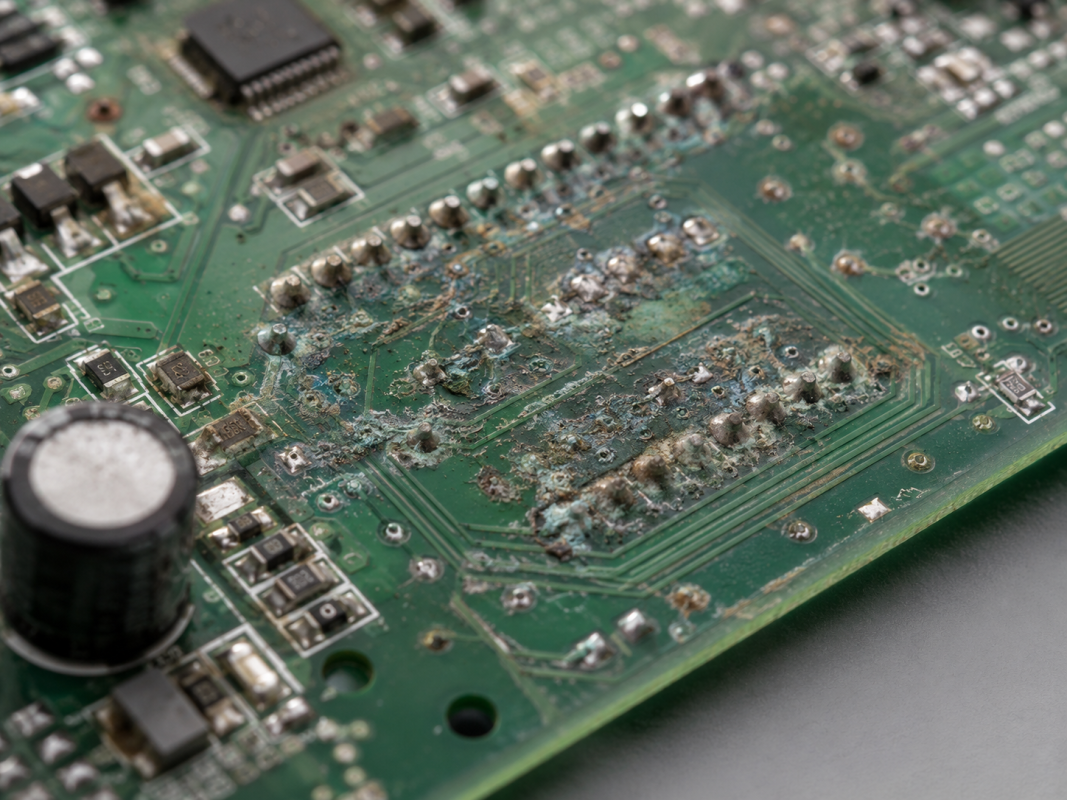
When liquid enters a digital piano, it doesn’t just sit on the surface. It travels down through the key mechanism, along ribbon cables, and onto the main PCBs, sample boards, and power supply. As explained in how electronic circuit boards respond to moisture damage, liquid acts as a conductor across tracks that are designed to be isolated, causing short circuits, corrosion, and component failure.
The damage can be immediate, or it can develop gradually as moisture causes corrosion over days and weeks. This is why an instrument that appears to work fine immediately after a spill can develop faults weeks later.
The type of liquid matters significantly:
- Water is the least damaging in the short term but still causes corrosion if not cleaned properly
- Coffee, tea, and juice contain sugars and minerals that leave conductive residue even after drying, accelerating corrosion and causing sticky key mechanisms
- Alcohol-based drinks evaporate faster but can strip protective coatings from circuit board components
- Sugary soft drinks are among the most damaging, leaving thick residue across key contacts and PCB tracks that causes persistent faults long after the liquid has dried
Can a Liquid-Damaged Digital Piano Be Repaired?
In many cases, yes. The outcome depends on several factors:
- How quickly the instrument was powered off after the spill
- How much liquid entered the instrument and where it travelled
- What type of liquid was involved
- How long the instrument sat wet or damp before professional assessment
Instruments that were powered off immediately, allowed to drain, and brought in for professional assessment quickly have a strong chance of full or near-full recovery. Instruments that were left powered on, dried out at home without cleaning, or left for days before assessment often have more extensive corrosion and component damage.
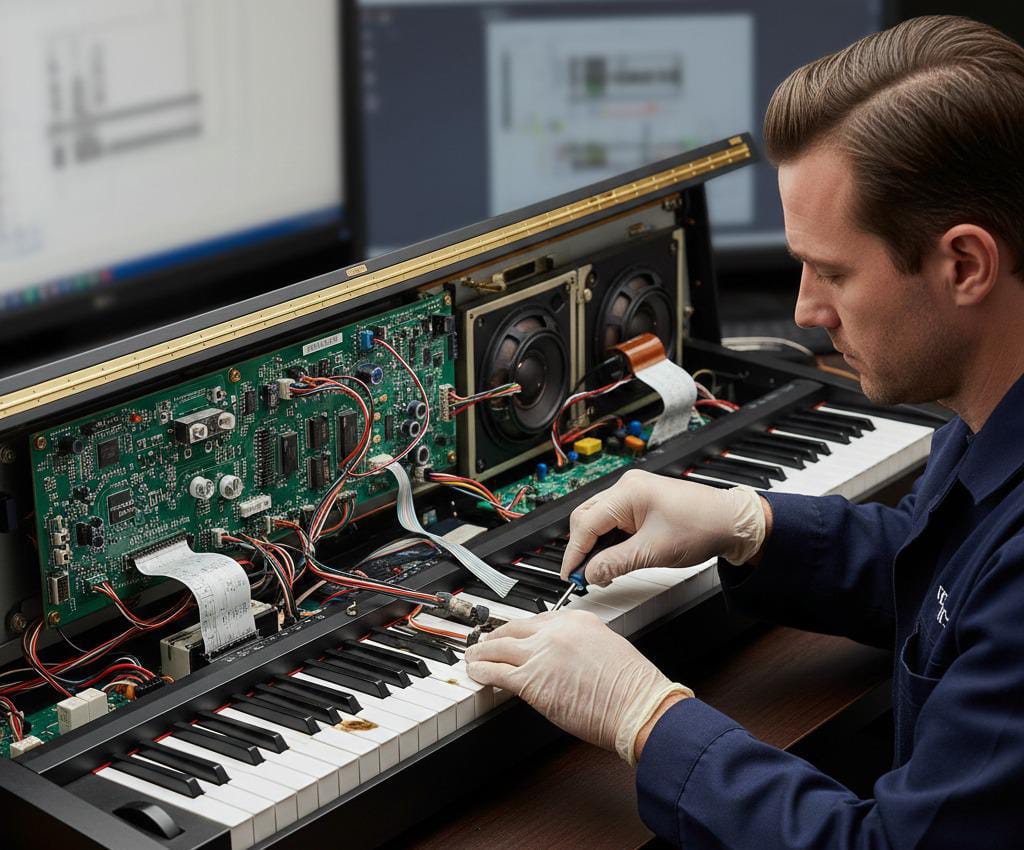
A professional assessment includes:
- Full disassembly and inspection of all affected PCBs and key contacts
- Ultrasonic or manual cleaning of contaminated boards
- Testing of all internal components for corrosion damage
- Replacement of any failed components identified during testing
- Full reassembly and function testing before the instrument is returned
For instruments requiring broader repair work beyond liquid damage, digital piano repair on the Sunshine Coast covers everything from PCB repairs and key replacements to full internal restorations across all major brands.
If your setup also includes other music equipment that needs attention, music equipment repair covers mixing consoles, studio monitors, amplifiers, and more.
For tips on keeping your instruments protected long-term, maintaining your recording equipment for long-term use has practical advice worth reading before the next incident.
When Is Repair Not Worth It?
There are situations where liquid damage is extensive enough that repair costs approach or exceed the instrument’s replacement value. A qualified technician will always assess honestly and advise you before any work begins.
Repair may not be cost-effective when:
- The instrument was left powered on for an extended period after the spill
- Heavy liquid volume reached multiple PCBs and the power supply
- Severe corrosion has spread across key circuit board traces
- The instrument is an older entry-level model with a low replacement cost
In these cases, an honest assessment from a local technician is still worth having before writing the instrument off entirely. Sometimes the damage is less extensive than it first appears.
Why Sunshine Coast Musicians Trust Brocky’s Electronics
We’re a local workshop, not a mail-away repair centre. When you bring your digital piano to us, a qualified technician with real hands-on experience assesses the damage honestly, explains what’s repairable, and gives you a clear quote before any work begins.
Here’s what you get with every repair at Brocky’s Electronics:
- Experienced technicians across Yamaha, Roland, Kawai, Casio, Korg, and Nord
- Honest assessment, we’ll tell you if replacement makes more sense than repair
- Fast turnaround, because we know you need your instrument back
- Professional board cleaning and component-level repair capability
- Transparent, upfront pricing with no surprises
We’ll let the locals we’ve helped do the talking.
Book Your Digital Piano Assessment Today
Don’t leave a liquid-damaged digital piano sitting at home getting worse. The sooner it’s assessed, the better the outcome. Whether it needs a professional clean, component replacement, or a full internal repair, the team at Brocky’s Electronics is ready to help.
From digital piano liquid damage repairs to valve amplifiers, televisions, and mixing consoles, you can find everything we do at Brocky’s Electronics.
Contact Brocky’s Electronics today and we’ll have your instrument assessed and back in playing condition as soon as possible.
FAQs
1. What should I do first if I spill liquid on my digital piano?
Power it off immediately and unplug it from the wall. Don’t try to play it or check if it works, every second it stays on while wet increases the damage.
2. Can a digital piano be repaired after a water spill?
Often yes, particularly if it was powered off quickly and brought in for professional assessment promptly. The outcome depends on how much liquid entered and where it travelled.
3. Is sugary drink damage worse than water damage?
Yes. Sugary liquids leave conductive residue across key contacts and circuit boards even after drying, causing persistent faults that worsen over time without professional cleaning.
4. My digital piano still works after a spill. Does it still need assessment?
Yes. Corrosion from liquid damage can develop gradually over days and weeks. An instrument that works immediately after a spill can develop faults later as corrosion progresses.
5. How long does liquid damage repair take?
Most assessments and repairs are completed within 3 to 7 business days depending on the extent of the damage and parts required.