
Your digital piano has been with you through years of practice, lessons, and performances. Now something’s gone wrong, and you’re faced with a decision that plenty of Sunshine Coast musicians find genuinely difficult: do you invest in digital piano repair, or is it time to move on?
The honest answer depends on several factors, and there’s no universal rule. At Brocky’s Electronics, we carry out digital piano repair for all brands and ages of instruments every week. Here’s a straightforward guide to help you make the right call for your specific situation.
What’s the Realistic Lifespan of a Digital Piano?
A quality digital piano is built to last. Mid-range to premium models from brands like Yamaha, Roland, Kawai, and Korg typically perform well for 10 to 20 years with normal care. That said, individual components, including key sensors, speaker systems, and pedal mechanisms, can fail sooner due to humidity, heavy use, or simply age.
Knowing where your instrument sits in that lifespan is one of the first things a professional assessment reveals. A 12-year-old Yamaha Clavinova with one faulty key sensor is a very different situation to a 12-year-old budget keyboard with multiple failing components.
The Key Question: What’s Actually Wrong?
The type of fault matters enormously when deciding whether digital piano repair makes sense. Some issues are quick and affordable to fix. Others point toward a deeper problem that may not be worth addressing.
Faults That Are Usually Worth Repairing
- Sticky, unresponsive, or unevenly weighted keys
- Pedals that don’t respond or behave inconsistently
- Speaker buzzing, distortion, or loss of output
- Loose or intermittent power connections
- Faulty input or output jacks
- Broken buttons or knobs
- Minor circuit board damage from age or humidity
These kinds of faults are common in older instruments and, in most cases, genuinely cost-effective to fix, particularly when the piano itself is a quality model.
Faults That May Not Be Worth the Investment
- Dead or severely damaged mainboards with no available replacements
- Extensive water damage affecting multiple systems
- Burnt-out power supplies combined with broader internal failures
- No replacement parts available for the specific model
If your instrument falls into this second category, a professional assessment will tell you quickly, and a good technician will be honest with you rather than recommend work that won’t deliver a satisfying result.
Repair Cost vs Replacement Cost: How to Think About It
Digital piano repair costs vary depending on the fault and the parts involved. Minor repairs typically run between $80 and $250. More complex work involving internal components, speaker systems, or specialised parts can reach $400 to $600.
A practical way to think about it:
- If the repair cost is less than 30 to 40 percent of what a comparable new instrument would cost, repair is almost always the right call
- If the repair cost approaches or exceeds 60 to 70 percent of replacement cost, the case for a new instrument becomes stronger
- If the piano is a premium model with significant replacement value, repair is almost always more cost-effective than buying new
For a broader look at how to assess whether repair is worthwhile across different types of instruments and electronics, Sweetwater’s repair vs replace guide for musical instruments covers the key considerations in detail.
Does the Brand and Original Quality Matter?
Absolutely. This is one of the most important factors in any digital piano repair decision.
A 15-year-old Yamaha Clavinova or Roland RD series instrument is worth repairing in most circumstances because:
- Genuine replacement parts are generally available
- The internal components are built to a higher standard and often repair well
- The sound quality and keybed feel of a quality older instrument frequently exceeds what a budget replacement offers
- The replacement cost for a comparable instrument is significant
A basic entry-level keyboard, regardless of age, is often cheaper to replace than repair, because the component quality and parts availability simply don’t support the economics of significant repair work.
What About Sentimental and Professional Value?
This matters more than some people expect. Musicians often have a specific relationship with their instrument that goes beyond specs and price comparisons. If your digital piano:
- Has been part of your playing for years and feels exactly right under your hands
- Was a significant gift or holds personal meaning
- Is part of a studio setup or live performance rig where consistency matters
- Has a specific touch or sound you haven’t found replicated elsewhere
These are entirely legitimate reasons to invest in digital piano repair rather than starting fresh with an unfamiliar instrument. A professional technician can restore most instruments to full playing condition, often for significantly less than the cost of a replacement.
If your instrument also has issues beyond the keyboard itself, our valve amplifier repair service covers related electronics for musicians who run both.
Warning Signs That Replacement Makes More Sense
Sometimes the honest advice is to move on. Consider replacement when:
- The same components have failed multiple times over recent years
- The instrument is technologically outdated for your current playing needs, lacking USB, Bluetooth MIDI, or weighted action improvements that matter to you
- Environmental damage from humidity or pests has caused widespread internal problems
- Parts for your specific model are no longer manufactured or available
- The cost of bringing the instrument to full working condition exceeds what it would cost to buy a better replacement
Our blog on why your digital piano turns off unexpectedly covers power-related faults specifically, and is worth reading if shutdown issues are part of what you’re dealing with.
Why a Professional Assessment Is Always the Right First Step
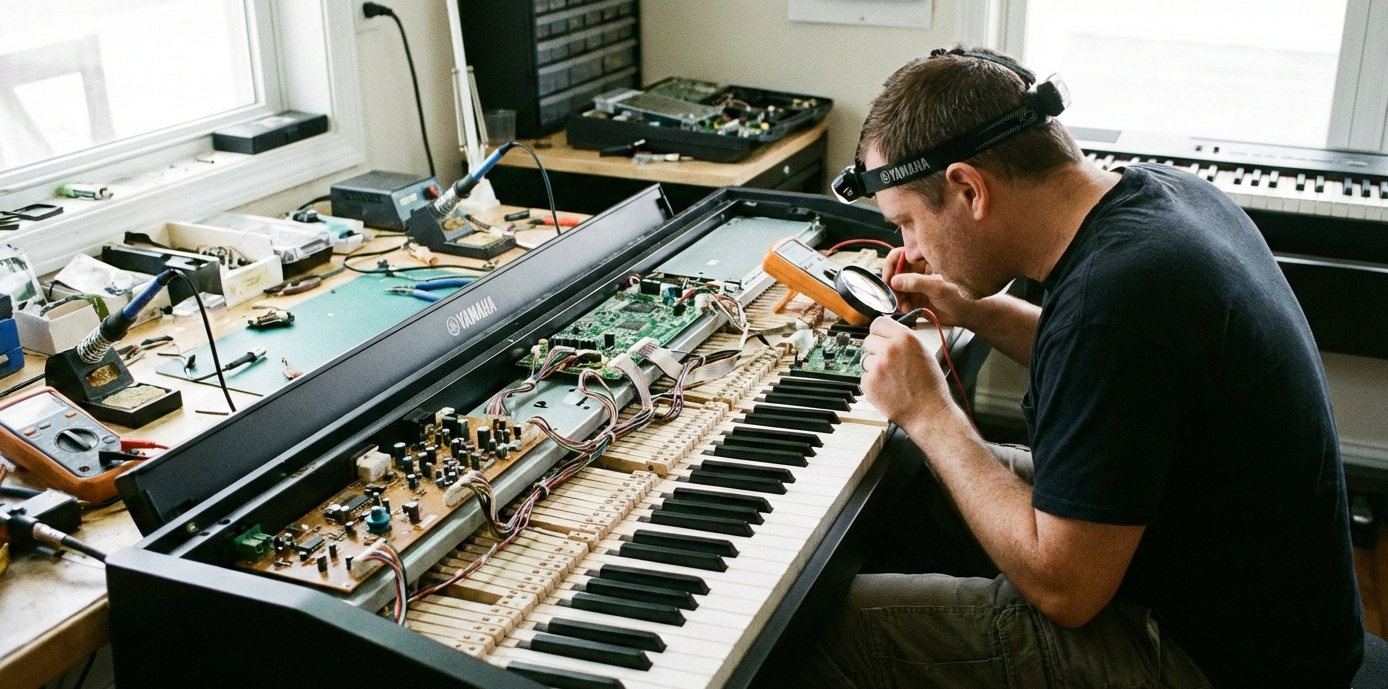
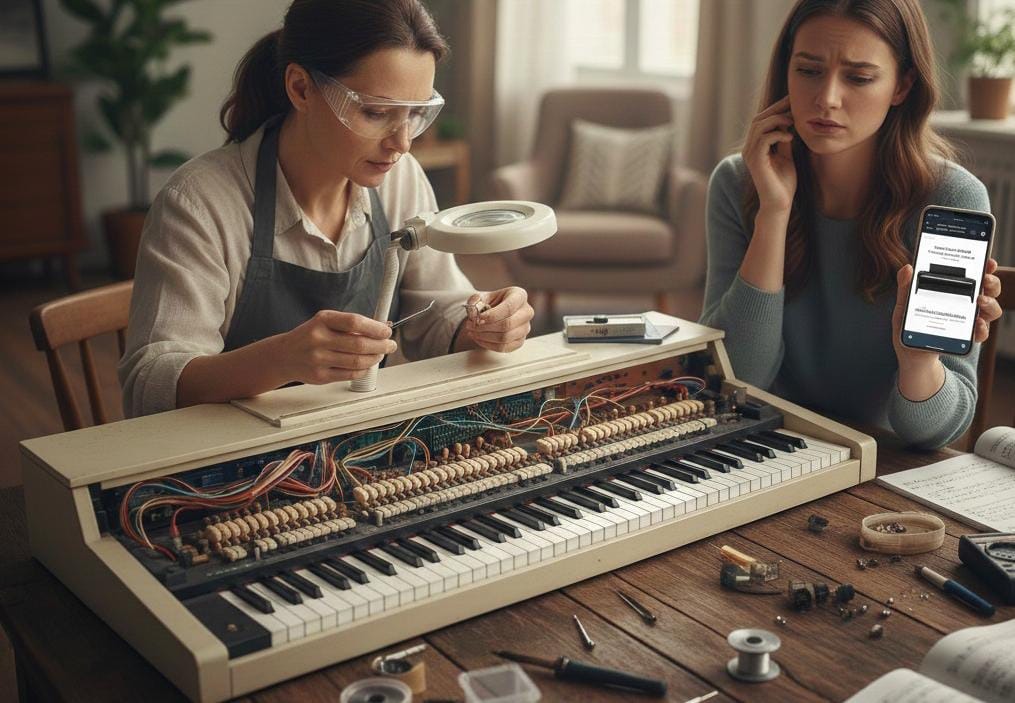
You don’t have to make this decision blind. A professional digital piano repair assessment identifies exactly what’s wrong, confirms whether parts are available, and gives you an accurate cost estimate before any work begins. That puts you in a position to make an informed decision rather than guessing.
At Brocky’s Electronics, we’re honest about when repair makes sense and when it doesn’t. We won’t recommend work that isn’t going to deliver a satisfying result for your instrument and your budget.
Our digital piano repair service on the Sunshine Coast covers all major brands including Yamaha, Roland, Casio, Kawai, Korg, and Nord, and we service instruments of all ages and conditions.
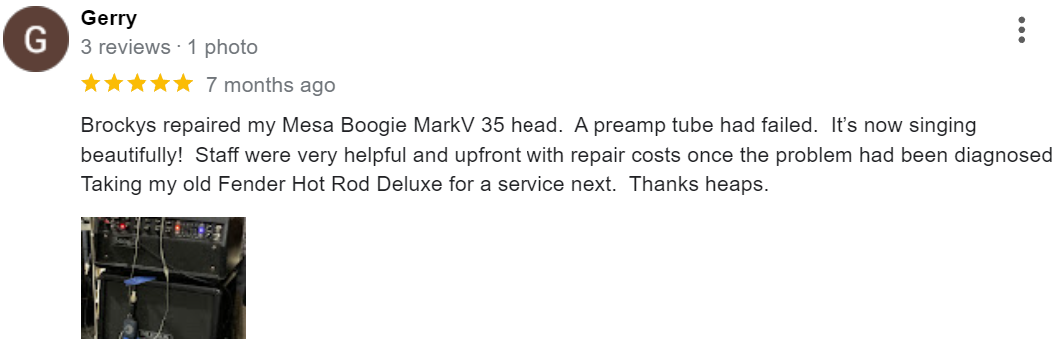
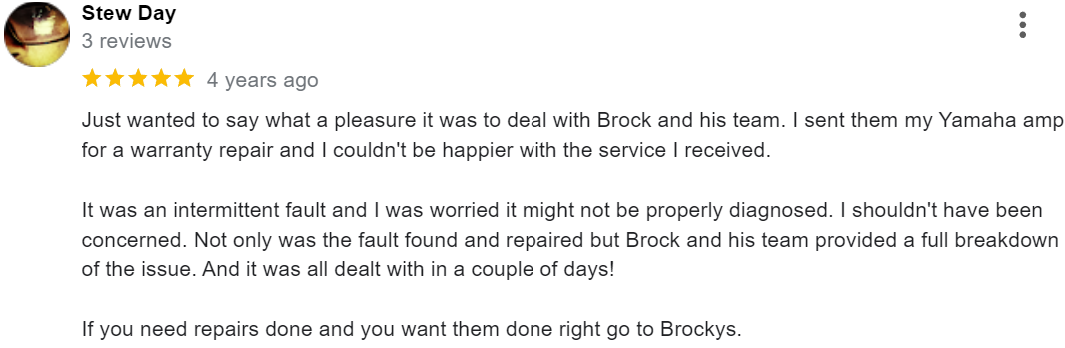
See what other Sunshine Coast musicians think of our work by reading reviews from our happy customers before you get in touch.
Book Your Digital Piano Assessment Today
Bring your instrument in and let us give you a straight answer. Whether it’s a simple fix or a more complex repair decision, the team at Brocky’s Electronics is ready to help.
Visit us at Shop 6/12 Newspaper Place, Maroochydore QLD 4558, call us on 1800 544 644 or text 0422 394 174, Monday to Friday between 8:30am and 4:00pm. Get in touch to book your digital piano repair assessment or get a no-obligation quote.
FAQs
1. How long do digital pianos typically last?
Quality mid-range to premium digital pianos generally last 10 to 20 years with normal care. Individual components may need attention sooner, but the instrument itself often has significant life remaining when issues first appear.
2. Is it worth repairing a digital piano with sticky or uneven keys?
In most cases, yes. Key mechanism repairs are among the most common and cost-effective digital piano repairs we carry out, and the result is a fully restored playing experience.
3. What if my digital piano has a dead mainboard?
This depends on parts availability. For some models, mainboard replacements are available and cost-effective. For others, particularly older or discontinued budget models, replacement may be more practical. A professional assessment confirms which situation applies.
4. At what repair cost should I consider replacing instead?
When repair cost approaches 60 to 70 percent of what a comparable new instrument would cost, the economics start to favour replacement. For premium brands with high replacement values, that threshold is higher.
5. Can humidity damage to a digital piano be repaired?
Often yes, depending on the extent. Early-stage humidity damage is frequently repairable through professional cleaning and component replacement. Severe long-term moisture damage may affect multiple systems and change the repair calculus significantly.